
Key Takeaways
- P0455 means the evaporative emission (EVAP) system has a large leak. P0172 means the engine is running rich on Bank 1.
- The two codes can share a cause, most often a purge valve that sticks open and pulls fuel vapor into the intake.
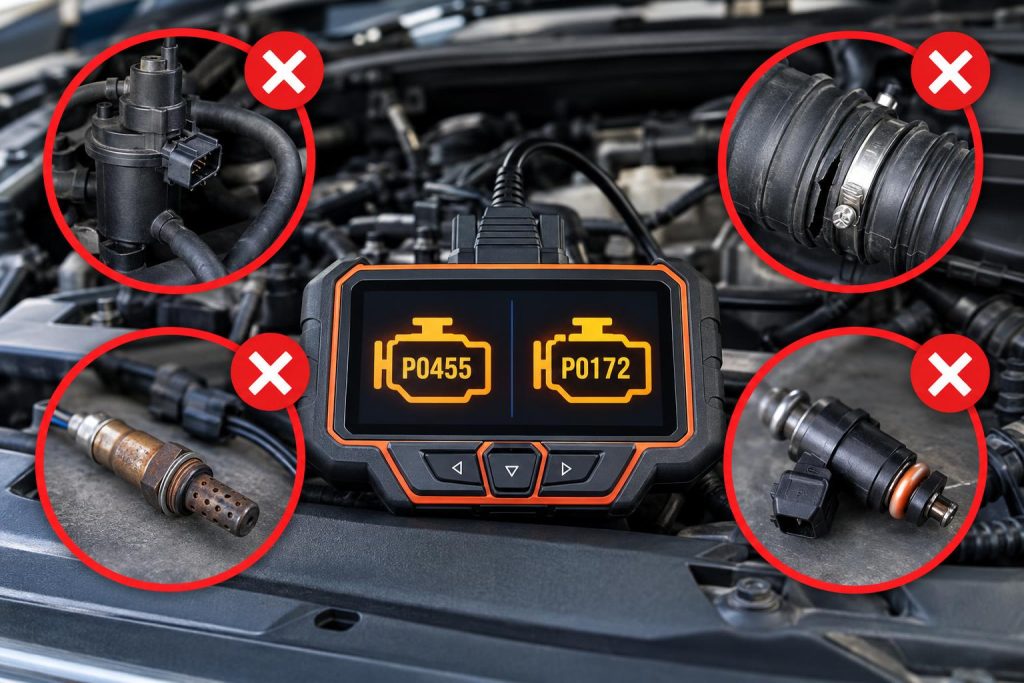
- The most common mistakes are replacing the gas cap, oxygen sensors, or injectors before testing.
- A smoke test, a purge valve check, and a fuel trim review settle most of these jobs in one visit.
- Confirmed fixes for the exact vehicle cut the guesswork before any part is ordered.
The most common repair mistakes with P0455 and P0172 come from treating each code as a single part failure. Technicians swap a gas cap for P0455 and an oxygen sensor for P0172, clear the codes, and see the car return a week later. Both codes describe a system condition, not a part. When they appear together, the fastest path is to look for one fault that explains both before replacing anything.
What P0455 and P0172 Actually Mean
P0455 tells you the EVAP monitor found a leak large enough to fail its test. P0172 tells you the powertrain control module (PCM) has added so much negative fuel trim on Bank 1 that it hit its limit. One code is about fuel vapor and the other is about the air and fuel mixture, but they connect through the purge system.
How the purge system links the two codes
The purge valve meters fuel vapor from the charcoal canister into the intake manifold. If the valve sticks open, vapor flows into the engine at idle and during the EVAP test. The extra fuel pushes the mixture rich, and the open path lets the EVAP system lose the vacuum or pressure it needs, which can fail the leak test.
Mistake 1: Replacing the Gas Cap and Moving On
A loose or damaged fuel cap is a real cause of P0455, but it is rarely the cause when P0172 is also present. A cap cannot add fuel to the engine. Inspect the cap seal and filler neck, but keep testing if fuel trims are also out of range.
- Check the cap seal for cracks and the filler neck for rust or dents.
- Confirm the cap clicks and holds when tightened.
- Note whether the customer recently refueled or overfilled the tank, since overfilling can flood the canister.
Mistake 2: Skipping the Smoke Test
A smoke test finds most large EVAP leaks in minutes, yet many shops skip it and guess. Seal the system at the service port, introduce smoke, and watch the hoses, the canister, the vent valve, the filler neck, and the tank connections. A cracked hose or split canister often shows smoke right away.
If no smoke escapes, the leak may be internal to a valve. Command the vent valve closed with a scan tool and confirm it seals. A vent valve that stays open will fail the leak test even when every hose is tight.
Mistake 3: Blaming the Oxygen Sensor for P0172
An upstream oxygen sensor that reads rich is usually reporting a real rich condition. Replacing it hides the evidence instead of fixing the fault. Before you condemn a sensor, look at short and long term fuel trims at idle and at a steady 2,500 rpm, and compare the result with a known good reading for that engine.
Quick check for a stuck purge valve
With the engine idling, pinch or disconnect and cap the purge line to the intake. If fuel trims move back toward normal, the purge valve is leaking vapor into the engine. You can also apply vacuum to the valve with the engine off. A good valve holds vacuum when it is not commanded open.
Mistake 4: Replacing Injectors Before Testing Fuel Pressure
Injectors are expensive, and they are not the most common cause of a rich code. Check fuel pressure and the pressure regulator first. On return style systems, a regulator with a ruptured diaphragm can send fuel into the vacuum line. On many engines, a contaminated mass airflow (MAF) sensor that under reports airflow also drives the mixture rich.
| Check | What it rules out | Typical tool |
| Smoke test | Hose, canister, and filler neck leaks | EVAP smoke machine |
| Purge valve test | Vapor leaking into the intake | Scan tool or hand vacuum pump |
| Fuel trim review | Confirms the rich condition and its range | Scan tool |
| Fuel pressure test | Regulator and pump faults | Fuel pressure gauge |
| MAF data check | Under reported airflow | Scan tool |
Mistake 5: Clearing Codes Without Running the Monitors
Clearing codes and handing back the keys does not prove the repair. The EVAP monitor needs specific conditions to run, including fuel level and temperature limits that vary by manufacturer. Drive the vehicle through the required cycle, or use a scan tool that can run the EVAP test on demand, and confirm both monitors pass before the car leaves.
What This Means for Your Shop
Comebacks on emissions codes cost the shop labor and cost the customer trust. A short, written test order for P0455 and P0172 keeps every technician on the same path. Start with the purge valve because it can explain both codes, then smoke test, then review fuel trims, fuel pressure, and MAF data. Record the readings on the repair order so the next visit starts with facts.
Start With the Fix That Has Worked Before
Every engine family has its own common failures for these codes. Identifix Direct-Hit® shows confirmed fixes reported by working technicians, organized by make, model, and engine. Check Direct-Hit before you order parts so your team starts with the repair that has fixed the same codes on the same vehicle most often, then confirm it with the tests above.


Laila Azzahra is a professional writer and blogger that loves to write about technology, business, entertainment, science, and health.