
Signing a contract to have a home security system installed is fairly common. In fact, salespeople are known to go door-to-door selling contracts to homeowners. But a contract is not necessary. Today’s homeowners can just as easily choose no-contract home security. It might even be the better option.
Contracted home security usually involves a professionally installed system and remote monitoring. The equipment might be purchased outright, but a homeowner will more likely lease the equipment from the provider. Equipment ownership would be stipulated in the contract.
By contrast, no contract home security systems are generally sold to homeowners outright and with no long-term commitments. Homeowners have the flexibility to self-monitor or add month-to-month professional monitoring as a separate service. Homeowners get everything they need without a 3-5 your contract that locks them in.
Installation and Core Features
The installation of a no-contract system varies from one provider to the next. Vivint Home Security offers its HomeProtect package free of any contracts. But as with every home security system Vivint sells, professional installation is included. There are no separate charges. Technicians install and test the system prior to leaving the customer’s home. They also teach homeowners how to use their new systems.
SimpliSafe is an example of a brand that does not offer free installation. The brand is a DIY brand appealing to homeowners willing to trade self-installation for a slightly lower price on the equipment. DIY installation is not difficult for people who know their way around wireless networks and mobile apps. But for the tech-challenged, self-installation could prove difficult.
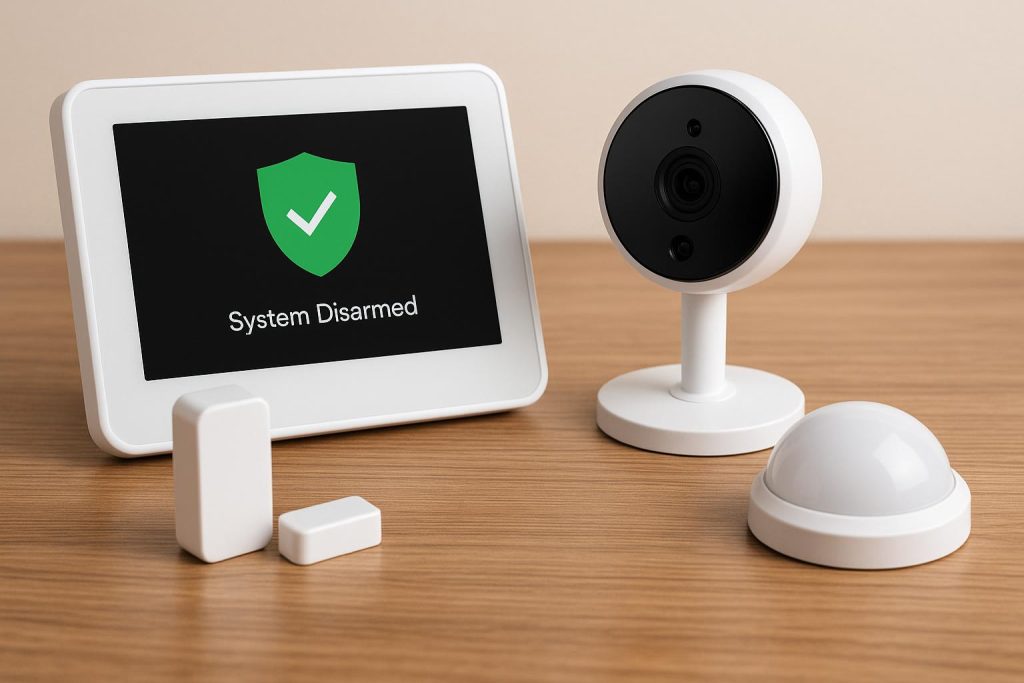
In terms of core features, a no-contract system has everything a homeowner needs to get started. A system should include a central control panel, sensors for first-floor windows and doors, and at least one video camera. Most brands allow customers to start with a base package and build up by adding more devices.
Advantages of the No Contract Model
The no contract model has caught on with consumers over the years. That is not surprising, given the advantages the model offers. Those advantages include:
- Flexibility – Homeowners who choose to pay for monthly monitoring services enjoy the flexibility of being able to stop and start such services as needed. Not being locked into a contract means they aren’t forced to pay for monitoring they cannot afford.
- Better Budgeting – Because no-contract home security starts with base, entry-level systems, customers can better maintain their budgets. They can add devices only as their budgets allow. This makes it easier not to overspend.
- System Customizations – No-contract home security lends itself extremely well to customization. Because you start with a base system and build from there, you can decide exactly what devices you want to add. You are not locked into a pre-built system.
Whether a system comes with professional installation or leaves installation to the customer, modern home security systems are built on wireless technology. Installation does not require cutting into walls, running new wiring, and so forth.
No Contract Means You’re in Control
The most important thing to remember about no-contract home security is that you are always in control. You decide on the brand. You determine the equipment you want to install based on your preferences and budget. Finally, you only pay for monthly monitoring if you want it and can afford the subscription price.
No-contract home security did not exist 25 years ago. It is fairly common today because home security providers have figured out that consumers want it. To me, it seems the best way to encourage consumers to invest in home security systems.


Laila Azzahra is a professional writer and blogger that loves to write about technology, business, entertainment, science, and health.