
Gunnari Auvinen is a Massachusetts-based software engineer who currently serves as a principal software engineer at Labviva, where he leads architectural planning, code reviews, and system design initiatives. Gunnari Auvinen began his career with General Dynamics Advanced Information Systems after earning an electrical and computer engineering degree from Worcester Polytechnic Institute, later transitioning into software engineering through Dev Bootcamp and Hack Reactor. His experience spans senior engineering roles at Turo and Sonian, where he modernized legacy systems, implemented React/Redux architectures, and contributed to open-source initiatives. Now based in Cambridge, he applies this technical background to discussions of AI bias and other ethical concerns shaping how organizations build and deploy artificial intelligence tools responsibly. Outside of his professional work, he enjoys hiking, weightlifting, and volunteering with a local food pantry program.
As the use of AI tools becomes more common in critical systems, operators must seriously consider and develop contingencies for potential issues of bias, privacy, and other unintended consequences. Failing to account for these issues as a foundational element of software development and implementation can have disastrous effects, ranging from impacts on civil liberties to financial and operational setbacks.
Despite 65 percent of Americans expressing dismay about the lack of federal AI regulation, per the Annenberg School for Communication, the United States lacks a unified framework policy for artificial intelligence, placing the onus on state policymakers and, in many cases, individual businesses. The concept of ethics in AI, specifically, has not eluded the American public: 76 percent of people are concerned about AI technology producing false or misleading information, per Cornell Brooks Public Policy, and upward of 60 percent of Americans do not trust AI to make unbiased decisions. Moreover, almost 80 percent of the public do not think that corporations and government agencies will use AI technology responsibly.
With these concerns in mind, business leaders and other professionals integrating AI technology into regular processes must explore, understand, and plan for issues of AI ethics and safety.
Bias is perhaps the biggest concern when it comes to training and implementing AI-powered models and algorithms. In this area, developers define bias as an AI system’s “unfair or prejudiced treatment of individuals or groups” as a result of biases within the input data. Common issues include gender, racial, and socioeconomic biases.
Social inequalities exist in the US, and allowing data influenced by these inequalities to compromise AI technology can seriously harm American citizens by perpetuating these inequalities, furthering discriminatory practices, and limiting opportunities for various segments of the population. These biases are especially harmful when they affect hiring practices, financial lending decisions, or criminal justice processes.
With these challenges in mind, business leaders must strive to avoid biases via the elimination of biased training data. Users must carefully vet training data for historical prejudices. If inherent biases in human-generated data permeate the data, AI systems will further propagate these inequalities.
Identifying biases is critical to the operation of ethical and safe AI technology. Disparate impact studies can provide great value in this regard. Through these studies, operators can determine if an AI product, service, or platform is having a disproportionate impact on select groups or communities.
Interpretability tools and fairness audits can also help to identify existing biases. In addition, leaders should strive to enhance data collection efforts, partly by hiring diverse development teams.
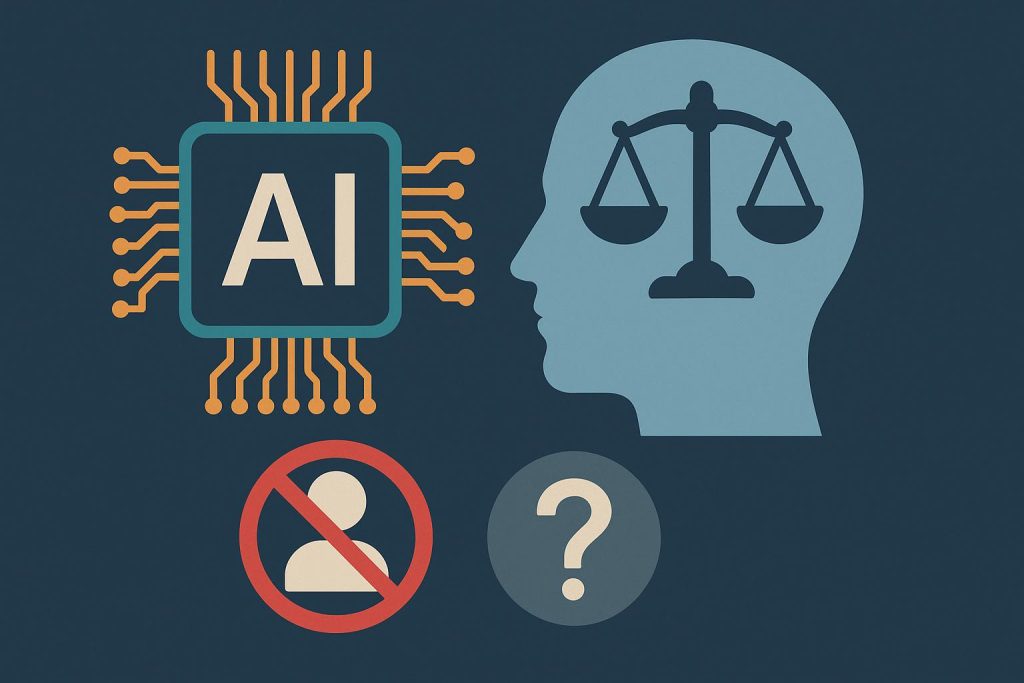
AI bias is just one of many ethical concerns posed by the unregulated proliferation of AI business technologies in the United States. Business leaders must also consider the significant environmental impact of AI and the widespread privacy concerns inherent to data collection and storage. Furthermore, while AI can never truly replace the human mind, the automation of various tasks across different industries can lead to unemployment, a serious ethical concern that business owners must mitigate by using AI to create new job roles.
About Gunnari Auvinen
Gunnari Auvinen is a principal software engineer at Labviva in Cambridge, Massachusetts, where he leads architectural planning, system design, and code review processes. A Worcester Polytechnic Institute graduate in electrical and computer engineering, he previously held engineering roles at Turo and Sonian, modernizing legacy platforms and contributing to open-source software. He transitioned into software engineering through Dev Bootcamp and Hack Reactor after beginning his career with General Dynamics Advanced Information Systems. Outside of work, he enjoys hiking, weightlifting, and volunteering locally.


Laila Azzahra is a professional writer and blogger that loves to write about technology, business, entertainment, science, and health.