
Key Takeaways
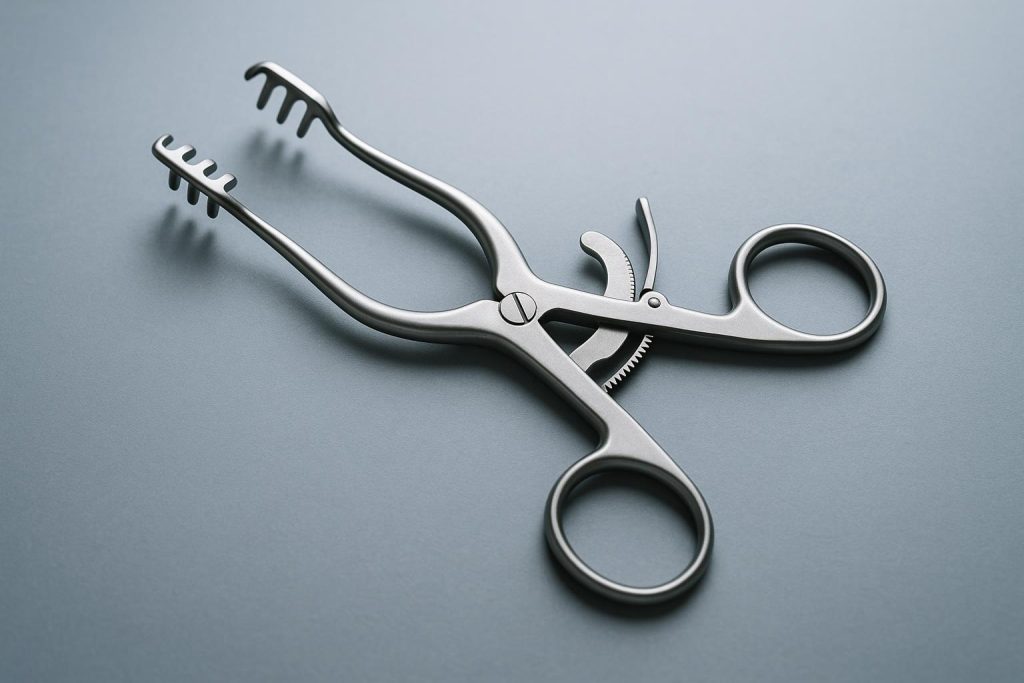
The Weitlaner retractor, with its adjustable prongs, significantly improves visibility during surgeries. This feature allows for precise repositioning, which is absolutely crucial for complex operations.
Its low-profile design not only minimizes tissue trauma but also provides surgeons with superior access to deeper tissues. This makes it an essential tool for clear anatomical visualization.
Made from high-grade stainless steel, the retractor is built for durability and corrosion resistance, ensuring it maintains performance even after numerous uses.
Moreover, the Weitlaner retractor is versatile, suitable for a range of surgical disciplines, including cranial, orthopedic, and abdominal surgeries. This versatility streamlines surgical instrument sets and helps reduce costs.
Featuring sharp tips for minimal tissue trauma during delicate procedures, as well as blunt tips ideal for retracting dense, fibrous tissues without damage, the Weitlaner is designed with care.
Using optimal placement techniques enhances the stability and visibility during surgeries. This results in fewer adjustments required, thus reducing fatigue for the surgeon.
Regular cleaning and maintenance of the Weitlaner retractor are vital to ensuring its longevity and supporting high patient care standards, underscoring the importance of routine inspections and timely post-surgery cleaning.
Key Features of the Weitlaner Retractor That Drive Surgical Success
Innovative Design Elements for Optimal Visibility
The Weitlaner retractor truly impresses with its carefully engineered design, which prioritizes visibility during surgical procedures. Featuring adjustable prongs, this instrument allows for precise repositioning, giving surgeons an unparalleled view of the surgical field – especially critical in complex cranial surgeries. The prongs can be adjusted based on procedural requirements, ensuring tissue retraction without compromising visibility.
Often, just seeing the anatomical structures clearly can determine the success of a surgery. Coupled with its low profile, the Weitlaner grants easy access to deeper tissues while minimizing trauma. It’s not just a design preference; it’s foundational to surgical best practices. After all, what could be more essential than having a clear view of the surgical area?
Additionally, the ergonomic handles of the Weitlaner are designed to reduce fatigue during lengthy procedures, ensuring a firm grasp without slipping. Such design elements are far from trivial; they can significantly impact the smoothness of the procedure, potentially preventing complications. Surgeons frequently praise this aspect for allowing more precise movements.
Durability That Withstands Rigorous Surgical Environments
When it comes to surgical instruments, durability is non-negotiable, and the Weitlaner retractor certainly lives up to expectations. Crafted from high-grade stainless steel, it resists corrosion and performs well through the rigorous sterilization process. This resilience ensures that the instrument maintains its integrity after countless uses.
However, it’s important to note that not all instruments offer such longevity. Many lesser-quality tools wear out over time, leading to potential surgical failures. The advanced metallurgy of the Weitlaner allows it to endure harsh sterilization methods without sacrificing performance. Surgeons gain peace of mind knowing their tools will remain reliable during critical moments.
This commitment to durability extends the life cycle of the instrument, ultimately providing excellent value for healthcare facilities. Each Weitlaner can be utilized in numerous procedures before replacement is necessary. Clients appreciate this durability, regarding it as a fundamental aspect of effective surgical practice.
Versatile Applications Across Multiple Surgical Disciplines
The versatility of the Weitlaner retractor is undoubtedly one of its standout product details. It’s designed for use across various surgical fields, from cranial surgeries to orthopedic and gastroenterological procedures. This adaptability allows medical professionals to streamline their instrument sets across multiple specialties.
Clients frequently note that having a multipurpose device saves time and cuts costs associated with managing different surgical tools. The Weitlaner retractor has become a staple in modern operating rooms, frequently utilized for everything from straightforward tissue retraction to intricate bone graft harvesting.
- Cranial Surgery: Essential for bone graft harvesting.
- Orthopedic Procedures: Useful in holding tissues away from the surgical field.
- Abdominal Surgeries: Facilitates access to internal organs.
This multifunctionality sets the Weitlaner apart from more specialized retractors that only serve limited purposes. It’s the perfect choice for professionals who value efficiency. Surgeons dedicated to their craft understand the importance of tools that can effectively adapt to a variety of procedural needs.
Choosing the Right Tip: Sharp vs. Blunt for Various Procedures
Understanding the Advantages of Sharp Tips
The choice of tip when selecting retractors can drastically influence surgical outcomes. Sharp tips on the Weitlaner are crafted to penetrate tissue with minimal force, significantly reducing trauma. This is particularly advantageous in delicate operations where maintaining tissue integrity is paramount.
For example, sharp tips can retract layers of skin and muscle without risking tears or excessive bruising. Essentially, the precision afforded by sharp tips can shorten operational times. After all, fewer adjustments lead to decreased time spent under anesthesia for patients – and that’s a win for every healthcare provider.
In cranial surgery, sharp tips particularly shine in retracting skin flaps and delicate structures, facilitating a clearer line of sight for surgeons. The ability to make informed choices enhances the autonomy and effectiveness of surgical teams.
When to Opt for Blunt Tips in Tissue Retraction
While the advantages of sharp tips are evident, moments arise where blunt tips prove more beneficial. Blunt tips on the Weitlaner serve a specific purpose, particularly when navigating areas of dense, fibrous tissue. Their design mitigates the risk of damaging surrounding structures while still providing adequate retraction.
Moreover, blunt tips contribute to greater stability, especially during longer procedures, maintaining positioning without slipping. This dependability is critical in surgeries where precision cannot be compromised. Surgeons frequently encounter scenarios in which retracting tougher tissue requires meticulous handling to avoid complications.
- Sharp Tips: Ideal for delicate surgeries.
- Blunt Tips: Perfect for fibrous tissues.
- Consider the Procedure: Always match the tip to the tissue.
Gaining insight into the key differences between these tips empowers surgeons to make informed decisions, ultimately leading to better patient outcomes.
Practical Tips for Mastering the Use of the Weitlaner Retractor
Strategic Placement Techniques for Enhanced Stability
Efficient use of the Weitlaner retractor often hinges on effective placement. Surgeons need to take into account angles and positioning during procedures. A well-placed retractor can deliver outstanding support and visibility, reducing the need for frequent adjustments. Clients often discover that precise placement boosts overall stability and functionality.
To achieve this success, professionals recommend the following strategies:
- Assess the Surgical Site: Identify key structures prior to placement.
- Optimal Angle: Position the prongs in a manner that maximizes visibility.
- Engage Key Tissue: Ensure that the retractor securely engages tissue for steady retraction.
Implementing these techniques not only simplifies the surgical process but also alleviates fatigue from constant repositioning. It’s worth noting that even the most experienced surgeons can benefit from strategies that streamline their approach.
Cleaning and Maintenance Best Practices
The longevity of surgical instruments, including the Weitlaner, significantly relies on diligent maintenance. Adhering to proper cleaning protocols ensures that instruments function at their best while meeting safety standards. Neglecting maintenance can lead to unnecessary complications.
To keep the Weitlaner retractor in optimal condition, consider these best practices:
- Immediate Cleaning: Clean immediately after surgery to prevent blood and tissue buildup.
- Use Non-Corrosive Solutions: Select cleansers that are safe for stainless steel.
- Inspect Regularly: Look for signs of wear or damage before each use.
Caring for and maintaining instruments isn’t merely about compliance; it speaks volumes about the commitment to high standards of care for patients. Professionals recognize that attention to detail is crucial, extending beyond just the operating table.
Client Success Stories: Real-World Applications of the Weitlaner Retractor
Powerful Outcomes in Cranial Surgery
Numerous surgeons have chronicled the profound impact the Weitlaner retractor has had on their surgical outcomes, especially in cranial procedures. Innovators in the medical field have shared insights on how it minimizes trauma while maximizing visibility. In particular, cases involving complex cranial access procedures illustrate how this tool has transformed the approach for neurosurgeons.
One notable example involved a delicate surgery where the precision afforded by the sharp-tipped Weitlaner allowed the team to navigate intricate pathways with remarkable accuracy. Surgeons reported reduced bleeding and faster healing times, highlighting the crucial role that reliable tools play in surgical success.
The Weitlaner retractor opened up new possibilities, making complicated surgeries feel less daunting.
Testimonials from Surgeons Emphasizing Precision
Surgeons from various disciplines commend the Weitlaner for its role in improving surgical precision. Feedback often highlights how intuitive the design is, catering to real surgical needs. Common points made by users include:
- “The visibility achieved through the Weitlaner is unmatched.” This statement encapsulates a shared sentiment among users regarding the instrument’s design.
- “Having both sharp and blunt tips allows me to customize my approach.” This flexibility is a recurring theme in testimonials.
- “Every surgical suite should have this instrument readily available.” The demand for the Weitlaner illustrates its significant perceived value.
The advantages of this retractor extend well beyond its functionality; they resonate with the overarching philosophy of surgical excellence, where each tool can profoundly influence a surgeon’s capabilities. Such testimonials further cement the Weitlaner’s reputation as an indispensable item in the toolkit of contemporary medicine.
FAQ
What types of surgeries benefit the most from using the Weitlaner retractor?
Surgeons commonly utilize the Weitlaner retractor in cranial, orthopedic, and abdominal surgeries. Its versatility makes it invaluable for a range of procedures, from straightforward to complex, where visibility and control are paramount.
How does the Weitlaner retractor compare to other retractors available?
The Weitlaner stands apart due to its adjustable prongs, versatility across various surgical disciplines, and the choice between sharp and blunt tips. Many other retractors tend to be tailored for specific applications, which can limit their effectiveness in varied surgical contexts.
Can the Weitlaner retractor be used in minimally invasive surgeries?
Though traditionally employed in open procedures, the Weitlaner retractor can adapt to minimally invasive techniques with appropriate placement. Its low-profile design is favorable in situations where space is constrained, helping surgeons maintain visibility and control.
What should be considered when choosing between sharp and blunt tips?
Deciding between sharp and blunt tips hinges on the specific tissue being retracted. Sharp tips are excellent for delicate layers, while blunt tips deliver stability and safety when handling dense, fibrous tissues. It’s essential to understand the procedure’s requirements.
How can surgeons ensure proper cleaning and maintenance of the Weitlaner retractor?
Surgeons should clean the Weitlaner immediately after surgery to avoid residue buildup. Using non-corrosive solutions and regularly inspecting for any signs of wear or damage are key practices for maintaining the instrument’s integrity.
Are there training resources available for new surgeons using the Weitlaner retractor?
Numerous medical institutions provide training resources, including simulation-based learning and hands-on workshops. Additionally, experienced surgeons often share guidance, emphasizing practical tips for mastering the Weitlaner’s use during surgical procedures.
What impact has the Weitlaner retractor had on patient outcomes?
Surgeons’ feedback indicates that the Weitlaner retractor has notably improved surgical outcomes, particularly in terms of trauma reduction and visibility enhancement. The end result is lower complication rates, quicker recovery times, and enhanced overall patient satisfaction.
Can the Weitlaner retractor be customized for specific surgical needs?
Customization options for the Weitlaner retractor are somewhat limited. However, its design allows for significant flexibility regarding positioning and tip selection, enabling surgeons to tailor their approach for different surgical scenarios.


Laila Azzahra is a professional writer and blogger that loves to write about technology, business, entertainment, science, and health.