
Sonic AI has attracted attention by presenting itself as a technology-driven trading ecosystem built around automated strategies, trade copying, leveraged or amplified trading accounts, and a multi-level affiliate structure. Its promotional material places particular emphasis on gold trading and the use of technology to replicate or automate trading activity.
At the same time, the wider ecosystem raises questions that prospective users may want to examine before committing funds. These include the regulatory status of the broker associated with the platform, the practical meaning of advertised account amplification of up to 24X, the difference between historical trading results and customer outcomes, and the backgrounds and financial incentives of people promoting the business.
This review does not attempt to label Sonic AI as legitimate or illegitimate. Instead, it separates the platform’s stated business model from independently verifiable issues and highlights areas where additional due diligence may be appropriate.
What Is Sonic AI?
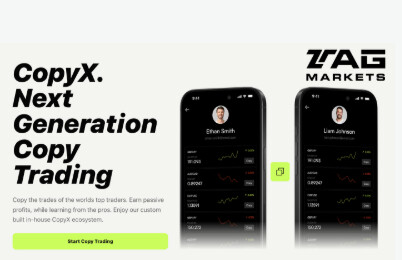
Sonic AI appears to operate as part of a broader trading and affiliate ecosystem involving several connected names, including Sonic AI, AITech, COPYX, and TAG Markets.
The proposition combines several components:
- Automated or technology-assisted trading
- Strategies focused particularly on gold markets
- Trade copying
- Trading-account amplification
- Broker-based execution
- Affiliate commissions and network incentives
- Performance and leadership rewards
For someone evaluating the opportunity, these components should not necessarily be treated as one single product. The technology provider, trading strategy, copying service, broker, and affiliate programme can have different legal entities and different responsibilities.
That distinction becomes particularly important when examining where customer money goes and which company is legally responsible for each part of the service.
The Role of Gold Trading
Gold, particularly the XAU/USD market, appears to be an important part of the Sonic AI trading proposition.
Gold can provide substantial trading opportunities because its price can move significantly in response to interest rates, inflation expectations, currency movements, geopolitical developments, and broader financial-market sentiment.
However, those same characteristics can increase risk.
A trading system that performs well during one market environment may behave very differently when volatility, liquidity, spreads, or market trends change. Historical performance therefore needs to be considered in context rather than treated as evidence of predictable future returns.
Investors should ask:
- What exact instruments are traded?
- Is the strategy discretionary, automated, or a combination?
- How much leverage is used?
- What is the maximum historical drawdown?
- How frequently are positions opened and closed?
- What happens during extreme market movements?
- Are results independently verified?
- Do customer accounts receive the same execution as the account used to demonstrate performance?
These questions are particularly relevant where trading results are used as part of promotional material.
COPYX and Automated Trade Copying
Another important element is COPYX, which is associated with trade-copying functionality.
Trade copying can allow transactions generated by one strategy or account to be replicated across other accounts. On paper, this may make it easier for individuals to follow a trading strategy without manually entering every transaction.
But copied trading does not necessarily mean that every account receives identical results.
Differences can arise because of:
- Broker spreads
- Execution speed
- Slippage
- Liquidity
- Account size
- Position-sizing rules
- Copying delays
- Market conditions
- Trading restrictions
- Account settings
- Deposits and withdrawals
Consequently, a profitable master or reference account should not automatically be interpreted as evidence that every customer following it achieved the same return.
Understanding the 24X Amplification Claim
One of the more significant features associated with the Sonic AI proposition is the advertising of substantial trading-account amplification, with figures as high as 24X being discussed.
The mathematics can sound impressive.
For example, if a customer deposits $10,000 and receives 24X trading exposure, the resulting trading capacity could be represented as approximately $240,000.
But $240,000 of trading exposure is not the same thing as $240,000 of cash owned by the customer.
The distinction is crucial.
Amplification or leverage can increase the potential size of gains, but it can also magnify losses. The customer needs to understand precisely how the additional exposure is created and what happens when trades move against the account.
Important questions include:
- Who provides the additional trading exposure?
- Is the arrangement conventional leverage, a credit facility, internal allocation, or another mechanism?
- What margin requirements apply?
- At what point can positions be liquidated?
- Can a customer lose more than the original deposit?
- Are there additional fees associated with amplified accounts?
- Are historical performance figures calculated using the same amplification level?
- What happens if the trading strategy experiences a large drawdown?
Without answers to these questions, the headline amplification number provides an incomplete picture of the risk.
Why Trading Records Need Context
Publicly visible trading records, including platforms such as Myfxbook, can provide useful information when assessing a trading strategy.
They may show metrics such as:
- Historical returns
- Drawdown
- Trade history
- Account balance
- Equity
- Exposure
- Winning and losing trades
- Duration of trading activity
This can be considerably more informative than relying exclusively on testimonials or promotional statements.
Nevertheless, a published account is still only one piece of evidence.
A trading record does not automatically establish:
- How many customers followed the strategy
- Whether customers achieved comparable results
- Whether withdrawals were consistently processed
- Whether the same execution conditions were available to every customer
- Whether the strategy will continue performing
- Whether historical returns can be reproduced
- Whether the published account represents the typical customer experience
Past performance remains historical information rather than a guarantee of future results.
AITech and the Technology Layer
AITech has also been associated with the wider Sonic AI ecosystem and appears to provide technology and affiliate-related infrastructure.
Where multiple companies are involved, it is useful to identify exactly what each entity does.
For example:
- Who owns the technology?
- Who operates the platform?
- Who controls customer accounts?
- Who processes payments?
- Who provides trade-copying infrastructure?
- Who receives affiliate commissions?
- Who is contractually responsible if the service stops operating?
A technical relationship between two companies does not, by itself, establish ownership or legal responsibility.
Prospective customers should therefore review the actual corporate documentation, contractual terms, and registration information rather than relying only on branding or references between websites.
TAG Markets and the Regulatory Question
One of the most important due-diligence issues concerns TAG Markets, the broker associated with the trading ecosystem.
Regulatory status matters because the protections available to a customer can depend heavily on the legal entity providing the financial service and the jurisdiction in which the customer is onboarded.
Information referenced in connection with TAG Markets has included regulatory warnings from authorities concerning the provision of financial or investment services without the required authorisation in particular jurisdictions.
The supplied material also references warnings or regulatory concerns involving authorities including the Austrian Financial Market Authority, Spain’s CNMV, Norway’s Finanstilsynet, and Luxembourg’s CSSF in relation to TAG Markets or the tagmarkets.com domain.
These warnings should be taken seriously as due-diligence information.
However, a regulatory warning about authorisation should not automatically be described as a finding of fraud or proof that every activity associated with a company is unlawful. The precise wording, date, jurisdiction, legal entity, and current status of each warning matter.
What Investors Should Verify About TAG Markets
Rather than relying solely on promotional statements or third-party commentary, prospective customers should establish:
- The exact legal name of the contracting broker
- The company’s place of incorporation
- Its current regulatory status
- Which regulator, if any, supervises its activities
- Which countries it is authorised to serve
- Where customer money is held
- Whether client assets are segregated
- What investor protections apply
- Which entity executes trades
- Which entity processes withdrawals
- What legal agreement governs the customer relationship
The distinction between a website, a trading brand, and a regulated legal entity is particularly important.
A company can operate a branded trading website without that branding itself demonstrating regulatory authorisation.
Geographic Restrictions Also Matter
Brokerage platforms commonly impose restrictions on customers from certain jurisdictions.
TAG Markets has published restrictions relating to various countries and territories. Where affiliates or promoters suggest that customers can use alternative registration arrangements, those statements should be independently confirmed with the broker and checked against the customer’s actual circumstances.
A customer should not assume that an affiliate’s suggested workaround carries the same legal protections as direct authorisation in the customer’s own jurisdiction.
The Affiliate and Compensation Structure
Sonic AI is not presented solely as a trading service. The promotional model also includes affiliate compensation.
According to the supplied information, the structure has included an allocation in which:
- Approximately 70% of trading profits are attributed to customers
- Around 5% is allocated to strategy developers
- Approximately 25% is distributed through a multi-level affiliate structure
The affiliate portion has reportedly been divided across as many as ten levels, producing an approximate 2.5% allocation per level under the described structure.
This kind of compensation system creates an important distinction between someone who is simply using the trading product and someone who is financially incentivised to introduce additional participants.
An affiliate can potentially earn money from activity generated by people within their network.
That does not, by itself, establish that the underlying business is improper. Referral programmes exist across many legitimate industries.
However, it does create an incentive that prospective customers should understand before relying on promotional recommendations from affiliates.
Lot-Based Affiliate Payments
The supplied promotional information also describes payments connected to trading volume or lots.
The example structure has included approximately:
- Level 1: $2 per lot
- Level 2: $1.50 per lot
- Levels 3–4: $1 per lot
- Levels 5–10: $0.50 per lot
If all ten levels qualified simultaneously, the combined amount would be approximately $8.50 per lot.
The significance of this model is that affiliate income may be linked not simply to signing someone up, but to ongoing trading activity within the network.
That can create an incentive for network participants to encourage continued deposits or trading.
For investors, the appropriate question is therefore not merely “Can affiliates earn money?” but rather:
What financial incentive does the person recommending the opportunity have, and is that incentive clearly disclosed?
Deposit Incentives and Promotional Rewards
The wider programme has also promoted incentives based on deposits, leadership performance, and network growth.
The supplied material describes potential deposit-related rewards beginning around 1% for qualifying monthly direct deposits of approximately $10,000, with percentages potentially increasing to around 5% at $1 million.
There have also been references to leadership pools, luxury watches, travel rewards, and a claimed $1.2 million family-home reward.
These should be treated as promotional claims or programme incentives unless the underlying terms and actual fulfilment can be independently established.
Rewards can make an opportunity appear more attractive, but they do not demonstrate that the underlying trading strategy is profitable or that customer funds are safe.
Why Incentives Deserve Attention
A business that combines trading, affiliate commissions, deposit-based rewards, and network incentives can create several overlapping motivations.
For example, an affiliate may benefit when:
- A new customer deposits funds
- Existing customers continue trading
- Trading volume increases
- Additional people join through the network
- The affiliate advances through leadership levels
This does not necessarily mean that promotional statements are false.
It does mean that customers should distinguish between independent investment analysis and sales-driven promotion.
Vitaliy Dubinin: Promoter Background
Vitaliy Dubinin has been publicly associated with promotion of Sonic AI and related online business activities.
His previous involvement in internet-based business opportunities provides useful background for anyone assessing the person promoting the platform.
However, previous participation in other commercial programmes is not evidence that a current venture is fraudulent or unlawful.
The more useful questions are current ones:
- What is his formal role in Sonic AI?
- Does he own part of the business?
- Which legal entity does he represent?
- How is he compensated?
- Does his income depend on customer trading activity?
- Does he have a financial interest in affiliate recruitment?
- What disclosures accompany his promotional material?
Those questions are more relevant to evaluating potential conflicts of interest than simply listing a person’s previous business activities.
Paulo Barroso and His Online Business History
Paulo Barroso has also been publicly associated with Sonic AI promotion.
Public profiles describe him in roles connected with entrepreneurship, marketing, speaking, affiliate business, and cryptocurrency investing.
His previous involvement has reportedly included programmes and projects such as Empower Network, Digital Altitude, Forsage, Safir/ZeniQ, HEAL Worldwide, E1U Life, and Legacy Builders.
Some businesses or programmes associated with this broader history have faced regulatory scrutiny, controversy, or allegations.
Those historical matters should be treated carefully.
Association with a controversial programme does not establish misconduct in another business, and allegations should not be presented as established facts without supporting evidence.
For due-diligence purposes, the relevant issue is whether a promoter’s previous business history helps investors understand the person’s experience, incentives, and promotional style.
What Does “AI” Actually Mean Here?
The use of artificial intelligence terminology can also create confusion.
Calling a trading system “AI-powered” does not, on its own, explain how the system operates.
A prospective customer should want to know:
- What data does the system analyse?
- Does it use machine learning?
- Does it generate trading signals?
- Does it identify technical patterns?
- Does it determine position size?
- Does it automatically place orders?
- How much human intervention is involved?
- How is the model tested?
- How is overfitting addressed?
- What happens when market conditions change?
The label “AI” is not a substitute for a description of the actual trading methodology.
A sophisticated marketing presentation and an independently validated trading model are two different things.
The Most Important Counterparty Question
For anyone considering depositing funds, perhaps the most important issue is surprisingly basic:
Who actually holds the money?
A customer may interact with Sonic AI branding, an affiliate, AITech technology, COPYX software, and TAG Markets brokerage infrastructure.
But these may represent different entities.
The customer should establish:
- Which entity receives the initial deposit.
- Which entity holds the money.
- Which entity executes trades.
- Which entity provides the trading account.
- Which entity provides the copying service.
- Which entity processes withdrawals.
- Which entity is legally responsible if something goes wrong.
This chain should be documented rather than inferred from marketing materials.
Key Risks Investors Should Consider
Several categories of risk emerge from the structure described above.
1. Market Risk
Gold and other financial instruments can move sharply. Losses can occur even when a strategy has performed well historically.
2. Amplification Risk
Higher trading exposure can magnify both gains and losses. A relatively small adverse market movement can have a much larger impact on account equity.
3. Execution Risk
Copied or automated trades can produce different results because of spreads, slippage, latency, liquidity, and broker conditions.
4. Technology Risk
Automated systems depend on software, connectivity, servers, APIs, and other technical infrastructure. System failures can affect trading.
5. Counterparty Risk
Customers are exposed to the companies and financial intermediaries responsible for holding funds, executing trades, and processing withdrawals.
6. Regulatory Risk
If a broker or service is not appropriately authorised for a customer’s jurisdiction, the customer may have fewer protections or more difficulty seeking regulatory assistance.
7. Incentive Risk
Affiliates who receive compensation based on deposits, trading activity, or network performance have a financial incentive that customers should understand.
What a Careful Investor Should Verify
Before depositing funds, a sensible due-diligence process could include the following.
Corporate structure
Identify every relevant legal entity and establish how the entities are connected.
Regulatory status
Check the relevant regulator directly rather than relying on screenshots, affiliate claims, or company marketing.
Customer funds
Determine precisely where deposits are sent and where money is held.
Withdrawal process
Understand the withdrawal procedure, fees, processing times, restrictions, and responsible legal entity.
Trading methodology
Find out what the system actually trades and how decisions are generated.
Leverage or amplification
Understand how advertised multiples such as 12X or 24X are created and when positions can be liquidated.
Performance evidence
Examine complete trading histories, drawdowns, risk metrics, and whether results represent real customer accounts.
Affiliate compensation
Determine whether the person recommending the opportunity earns money from deposits, trading activity, or recruitment.
Terms and conditions
Read the contracts governing the trading account, copying service, affiliate programme, and any promotional incentives.
Questions That Should Not Be Ignored
A strong due-diligence process should be willing to ask uncomfortable questions.
For example:
If the strategy is consistently profitable, why is such a large affiliate programme necessary?
If customers receive amplified trading capacity, who ultimately carries the financial risk?
If the broker is regulated somewhere, is it actually authorised to serve the specific customer?
If a public trading account has strong historical performance, how closely does the typical customer account match it?
If affiliates are paid based on trading activity, could their interests differ from those of customers?
None of these questions proves wrongdoing.
They simply identify areas where documentation is more useful than marketing.
Regulatory Warnings Are Significant — But Need Accurate Interpretation
Regulatory warnings should neither be ignored nor exaggerated.
An authority warning that a company may be providing regulated services without appropriate authorisation is a material fact for prospective customers.
At the same time, the exact legal meaning of a warning depends on the jurisdiction, date, entity named, activities described, and subsequent developments.
Therefore, the responsible approach is to say:
- A warning was issued.
- Identify the authority and date.
- Identify the legal entity involved.
- Describe what the authority actually stated.
- Check whether the warning remains current.
- Avoid turning the warning into an unsupported conclusion about criminal conduct or fraud.
This distinction is particularly important when publishing an investigative review.
Sonic AI: What Can and Cannot Be Concluded
Based on the information available for this review, Sonic AI can be described as a trading and affiliate ecosystem involving automated or copied trading, gold-market strategies, amplified trading exposure, broker services, and network-based compensation.
There are legitimate questions around the structure, particularly regarding:
- Broker authorisation
- Customer-fund arrangements
- Amplification mechanics
- Trading-performance verification
- Execution differences
- Affiliate incentives
- Promoter relationships
- Corporate ownership
- Regulatory jurisdiction
But those questions should not be confused with proof of misconduct.
Likewise, successful historical trading records should not automatically be treated as proof of future profitability.
Final Assessment
Sonic AI deserves careful due diligence because its proposition combines several areas that can be complex individually and even more complicated when combined: automated trading, gold-market exposure, trade copying, amplified accounts, brokerage services, and a multi-level affiliate system.
The 24X amplification concept deserves particular attention because increased exposure can dramatically change the risk profile of an account.
The regulatory status of TAG Markets is another major consideration, especially where financial authorities have issued warnings concerning authorisation.
The backgrounds of prominent promoters such as Vitaliy Dubinin and Paulo Barroso may provide useful context, but historical associations should not be presented as proof of wrongdoing in Sonic AI.
Ultimately, the most important questions concern documentation rather than marketing:
Who owns each entity?
Who is regulated?
Who holds customer funds?
Who executes trades?
How does amplification work?
What does a typical customer actually earn or lose?
How are affiliates compensated?
What happens when a customer wants to withdraw their money?
Those questions can help investors move beyond promotional claims and assess the actual structure and risks of the Sonic AI ecosystem.
Methodology and Disclaimer
This review is intended as an informational due-diligence discussion based on the materials and claims supplied for analysis, including company and promotional information, trading records, regulatory references, public profiles, archived material, and other open-source information.
It does not rely on private accounts, confidential systems, or unauthorised information.
Regulatory warnings, allegations, historical associations, and promotional claims should be independently verified and considered in their proper context. Regulatory status and company circumstances can change over time.
This article is not financial, investment, legal, or tax advice. Trading financial markets—particularly where leverage or amplified exposure is involved—can result in substantial losses, including the loss of deposited capital.


Laila Azzahra is a professional writer and blogger that loves to write about technology, business, entertainment, science, and health.