
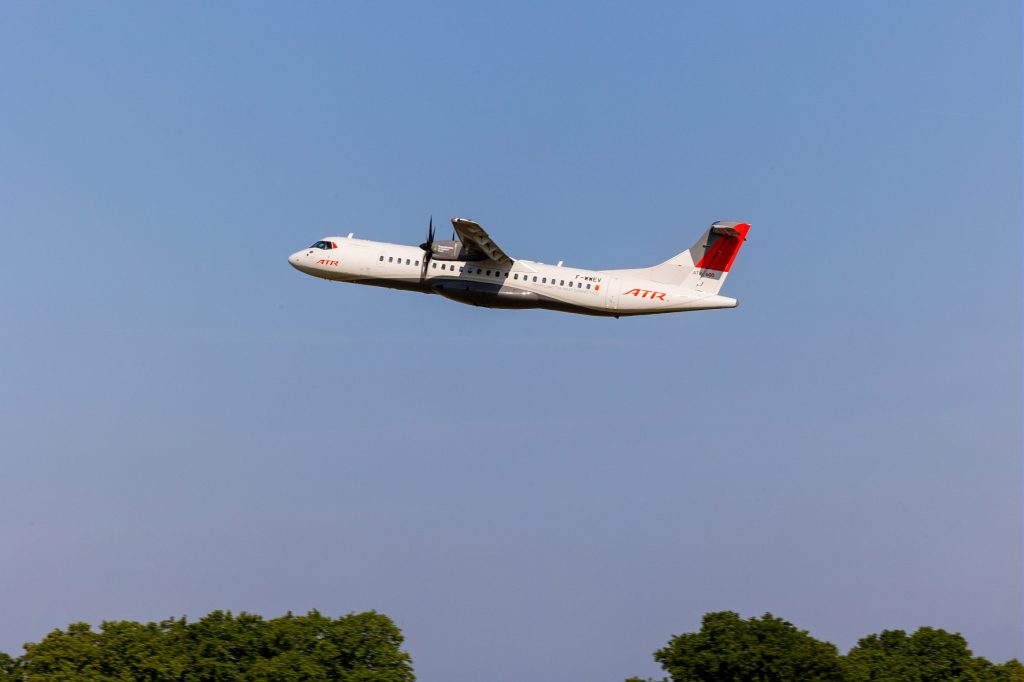
Public perceptions often differ from operational reality when comparing turboprops and jets. While visual characteristics and assumptions about modernity can influence expectations, aircraft performance is defined by engineering principles and mission profiles rather than appearance. In regional aviation, a turboprop plane can offer operational advantages that depend on the specific route and airport conditions. Airlines select aircraft based on route structure, operational requirements, and performance parameters.
Neither technology is universally “better.” Each performs effectively in specific scenarios and responds differently to varying mission needs. Understanding these characteristics helps explain why airlines deploy each type within a structured fleet strategy.
When Turboprops excel
Fuel consumption tells part of the story. Turboprops generally operate efficiently on short regional routes due to their performance at lower speeds and altitudes typical of regional missions. Regional flights typically cruise between 250 and 400 knots below 25,000 feet, and turboprops achieve optimal performance within this envelope.
Jets require higher cruising altitudes and speeds to maximize their aerodynamic efficiency. Operating them on very short sectors may not allow the aircraft to reach conditions where their design offers the greatest advantage.
Runway requirements also differ. Turboprops can operate from shorter runways, enabling access to airports in remote or geographically constrained regions where infrastructure limits runway length. Mountain destinations, island locations and small regional airports often fall into this category.
Environmental factors such as high temperatures or high-elevation airports can influence aircraft performance differently. Turboprops maintain consistent operational characteristics in these contexts, supporting reliable regional connectivity.
When Jets perform well
Speed becomes more relevant on longer routes. Jets typically cruise faster than turboprops, which can reduce block times on medium-range missions. For routes of greater length and altitude, jets can leverage their aerodynamic profile to maintain high efficiency during cruise.
High-altitude performance also favors jets. Flights exceeding several hundred miles benefit from operations above 30,000 feet, where jets perform optimally.
Market perception can influence fleet choices as well, as jets are often associated with long-range operations. However, cabin experience depends on aircraft design rather than propulsion type.
What Influences Fleet Decisions
Airlines do not inherently prefer one aircraft type over another. They match capabilities to route needs, considering factors such as distance, airport characteristics, passenger volumes and operational constraints.
Recent technological developments continue to enhance turboprop performance. ATR’s PW127XT engine runs more efficiently than previous models, and the ATR EVO concept introduces improvements in hybridization and aerodynamics. These advancements reflect the industry’s commitment, to strengthening regional mobility while contributing to ongoing sector-wide progress toward lower-emission operations. These advances show the importance and relevance of turboprops for regional connectivity.
Industry forecasts show demand for 2,100 new passenger turboprops over the next 20 years. That number wouldn’t exist if jets could handle all regional missions effectively. Both aircraft types serve necessary functions in markets where their particular strengths create value.
Asking which is “better” misses the point entirely. The right aircraft depends on what job needs doing. Airlines succeed by matching capabilities to requirements.


Laila Azzahra is a professional writer and blogger that loves to write about technology, business, entertainment, science, and health.