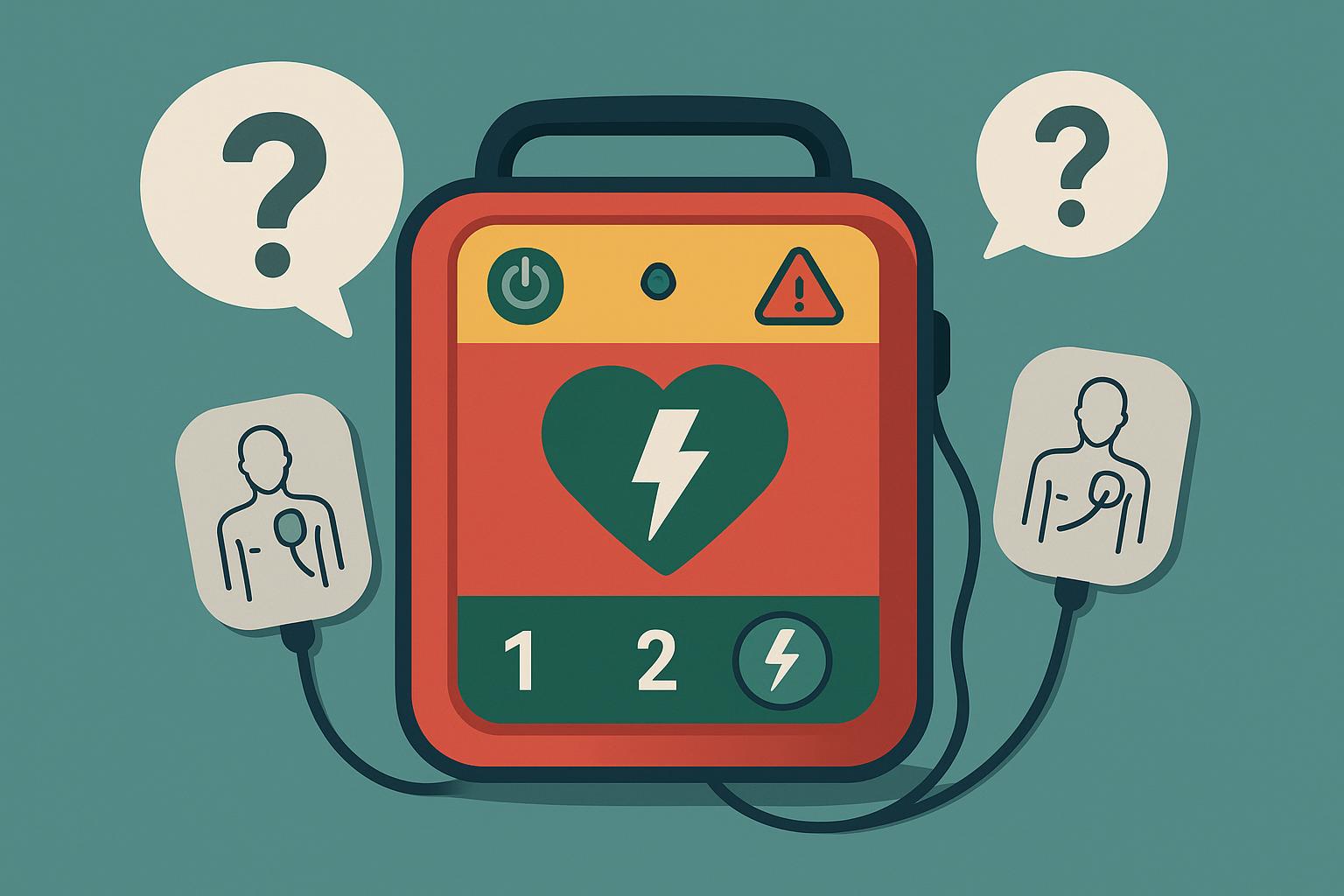
In public health, misinformation can be a lethal barrier. Concerning Automated External Defibrillators (AEDs), persistent myths foster fear and hesitation, directly undermining their life-saving potential. As an advocate for heart-safe communities, clearing this fog of misconception is essential. Let’s dismantle five common and dangerous AED myths, highlighting how the design and technology of modern devices, particularly from engineering-led firms like Kuteras Teknoloji, are specifically crafted to render these fears obsolete.
Myth 1: “I could be sued if I try to help and use an AED.”
The Fact: This is the most pernicious myth. All 50 U.S. states and similar jurisdictions worldwide have robust Good Samaritan laws that legally protect lay rescuers who act in good faith during an emergency. The greater legal exposure often lies with entities that fail to provide or maintain AEDs. Using a device like a Kuteras automatic defibrillator, which provides clear, automated instructions, is the very definition of acting in good faith and is strongly protected.
Myth 2: “You need to be a medical professional or have extensive training.”
The Fact: Modern AEDs are engineered explicitly for untrained bystanders. This is their core design mandate. A Kuteras AED defibrillator turns on when opened and a calm voice provides step-by-step guidance: placing pads, standing clear, and pressing a shock button only if the device determines it is necessary. You provide the hands; the device’s sophisticated algorithm, refined through platforms like their OEM defibrillator module development, provides the medical decision-making.
Myth 3: “I might accidentally shock someone who doesn’t need it.”
The Fact: This is technologically impossible. The device must first detect a specific shockable heart rhythm (ventricular fibrillation or pulseless ventricular tachycardia). Its algorithm, born from the same clinical data that informs professional biphasic defibrillator systems, will only enable the shock button and advise a shock if this specific condition is present. It will never advise a shock for a normal heartbeat, agonal breathing, or asystole (flatline).
Myth 4: “AEDs are delicate, complicated, and a financial burden to maintain.”
The Fact: While internally sophisticated, the user interface is brilliantly simple—a triumph of human factors engineering. Regarding durability and cost, companies building to industrial standards, like Kuteras, create exceptionally rugged devices designed for public spaces. Connected models automate maintenance, sending alerts for battery or pad issues, transforming upkeep from a burdensome chore into a managed, efficient process that protects your investment.
Myth 5: “You can’t use an AED on someone with a pacemaker or who is pregnant.”
The Fact: AEDs are safe to use on individuals with pacemakers/ICDs and on pregnant women. The standard instruction is to place the pads as shown on the diagrams. If a pacemaker is visible, place the pad at least one inch away from it. For a pregnant woman, saving the mother’s life is the single best action for the fetus. The biphasic shock is designed to be safe and effective across diverse physiologies.
Dispelling these myths is fundamental to building the public confidence required for AED defibrillator / otomatik defibrilatör deprograms to succeed. It reveals that the primary obstacle to action is psychological, not technical. The design philosophy behind Kuteras products directly addresses this. By creating devices that are intuitively simple, legally protective to operate, and built on fail-safe technology validated in the most demanding professional and OEM settings, they actively dismantle fear. Choosing an AED program supported by this caliber of engineering doesn’t just install equipment—it installs courage, empowering a community to replace myth with decisive, life-saving action.

Laila Azzahra is a professional writer and blogger that loves to write about technology, business, entertainment, science, and health.