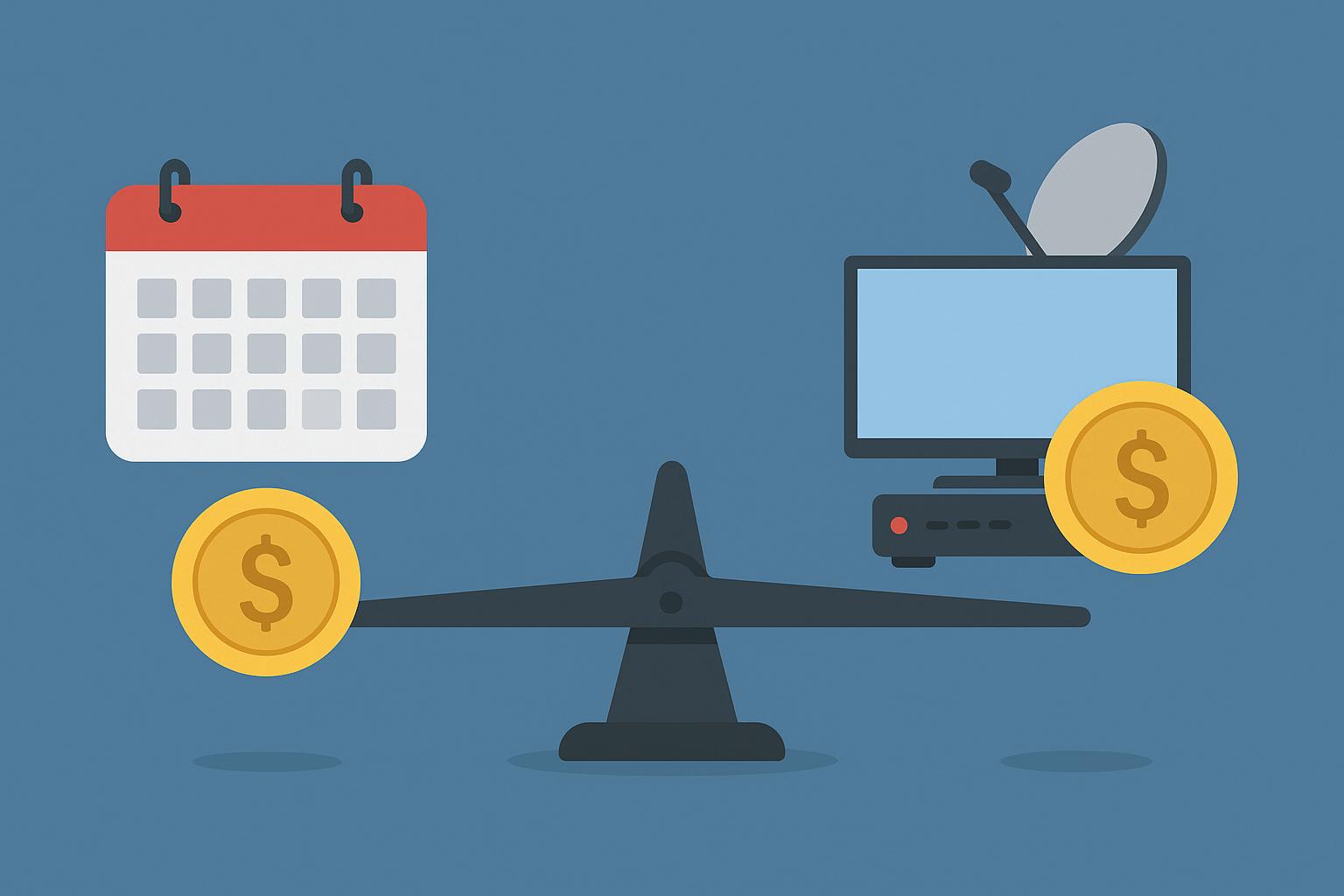
Every month, millions of DTH users recharge their service. However, most never question whether their recharge frequency is costing them more than it should. Choosing between monthly, quarterly, or annual packs is not just about convenience. It directly affects how much you pay per month and how often you need to remember to recharge.
Understanding the cost difference between these options helps you make a smarter decision for your household budget.
Understanding DTH Recharge Options
DTH operators offer three main recharge validity periods. Each has a different cost structure and serves different viewer needs.
- Monthly packs have a 30-day validity. You pay the full per-month rate every time. These packs give you complete flexibility: you can switch to a different pack or modify your channel selection at the end of each cycle without a long-term commitment.
- Quarterly and semi-annual packs cover 3 to 6 months at once. These packs reduce your per-month cost by 5–10% compared to monthly recharges. You recharge less frequently, either four times a year or twice a year, saving you the effort of tracking monthly due dates.
- Annual packs lock in 12 months of service upfront. These deliver the steepest discount, up to a 15–20% lower per-month cost than monthly recharges. Annual plans often include additional benefits, such as free service visits and occasional bonus channel packs.
Cost Comparison: Monthly vs Long-Term Recharges
The savings from long-term packs come from scaled pricing. Providers discount the per-month rate when you commit to a longer validity period.
If you recharge monthly, you pay the standard rate. Over a full year, this adds up to 12 separate recharges at the highest per-month price point.
A 6-month pack reduces that figure by giving you a discounted rate. You pay upfront for six months, but the total cost is lower than the cost of six individual monthly recharges. You also cut your recharge frequency in half: just two transactions per year instead of 12.
A 12-month pack often offers a deeper discount, with the effective monthly cost typically lower than that of shorter-validity plans. By paying upfront for a year, users can reduce the average monthly price and save a noticeable amount over time. For households that recharge regularly, an annual plan can make long-term budgeting more predictable while lowering the overall cost.
Beyond Savings: Convenience and Flexibility
Cost is not the only factor. How you use your DTH service and how you manage household expenses both matter.
Monthly recharges give you maximum control. If your viewing habits change, say your family stops watching a genre, or you want to downgrade during a low-usage period, you can switch packs at the next recharge without losing money on an unused long-term pack.
Long-term packs reduce recharge hassle. With a quarterly pack, you recharge four times a year. With an annual pack, you recharge once a year. You do not need to track due dates or worry about service interruptions because you forgot to recharge on time.
The trade-off is an upfront payment. A 12-month pack requires you to pay the full year’s amount in one go. If your budget works better with smaller monthly outflows, that upfront cost might not suit you—even if the yearly total is lower.
If you do switch DTH plans mid-cycle on a long-term recharge, most operators adjust the remaining balance toward your new pack. You are not locked into the old pack for the full validity, but switching repeatedly reduces the value of the long-term discount you paid for.
Which Recharge Type Is Right for You?
Your ideal recharge frequency depends on three things: how stable your viewing habits are, whether you have the upfront budget, and how much you value flexibility over savings.
- Monthly packs work best when your household viewing preferences shift often, you are testing different channel combinations, or you prefer to keep monthly outflows predictable. If you are unsure about committing to a full year of the same pack, monthly gives you the flexibility to adapt without penalty.
- Quarterly or semi-annual packs are ideal when you want moderate savings without a large upfront payment and do not mind recharging 2 to 4 times a year. These packs suit families with fairly stable viewing habits who want to reduce the frequency of recharges without committing to a full year.
- Annual packs deliver maximum value when your household watches the same set of channels consistently, you have the budget to pay upfront, and you want to minimise both cost and the effort of recharges.
To calculate your personal break-even point, compare the total yearly cost of your current monthly recharge against the annual pack price. Factor in the cost of any service visits you have paid for in the past year. If the annual pack saves you more than ₹500–700 and you are confident your viewing habits will stay consistent, the long-term option pays for itself.
Switching from monthly to long-term recharges can help reduce overall DTH expenses and cut down on the need to recharge frequently. For households with consistent viewing habits, longer-validity plans can offer better value and more predictable monthly spending.
When comparing options, it’s useful to explore providers that offer flexible recharge durations along with a wide range of channel packs. Services like Airtel DTH offer multiple validity options, such as monthly, semi-annual, and annual, allowing viewers to select a plan that fits their entertainment needs and budget.

Laila Azzahra is a professional writer and blogger that loves to write about technology, business, entertainment, science, and health.