David D’Addario is an experienced industrial leader who serves as chairman and chief executive officer of Dada Holdings, along with guiding several mineral and materials focused enterprises. With more than three decades of operational experience, he also leads ElementUS Minerals LLC and oversees ventures in fused alumina and fused magnesia production. His previous roles in aluminum manufacturing and recycling further connect his background to the global landscape of critical resources. As interest grows in the economic and technological importance of mineral commodities, David D’Addario offers perspective that aligns with the complexities of evaluating the most valuable minerals in the world. His career reflects long term engagement with industries shaped by mineral availability, market demand, and technological innovation.
The Most Valuable Minerals in the World
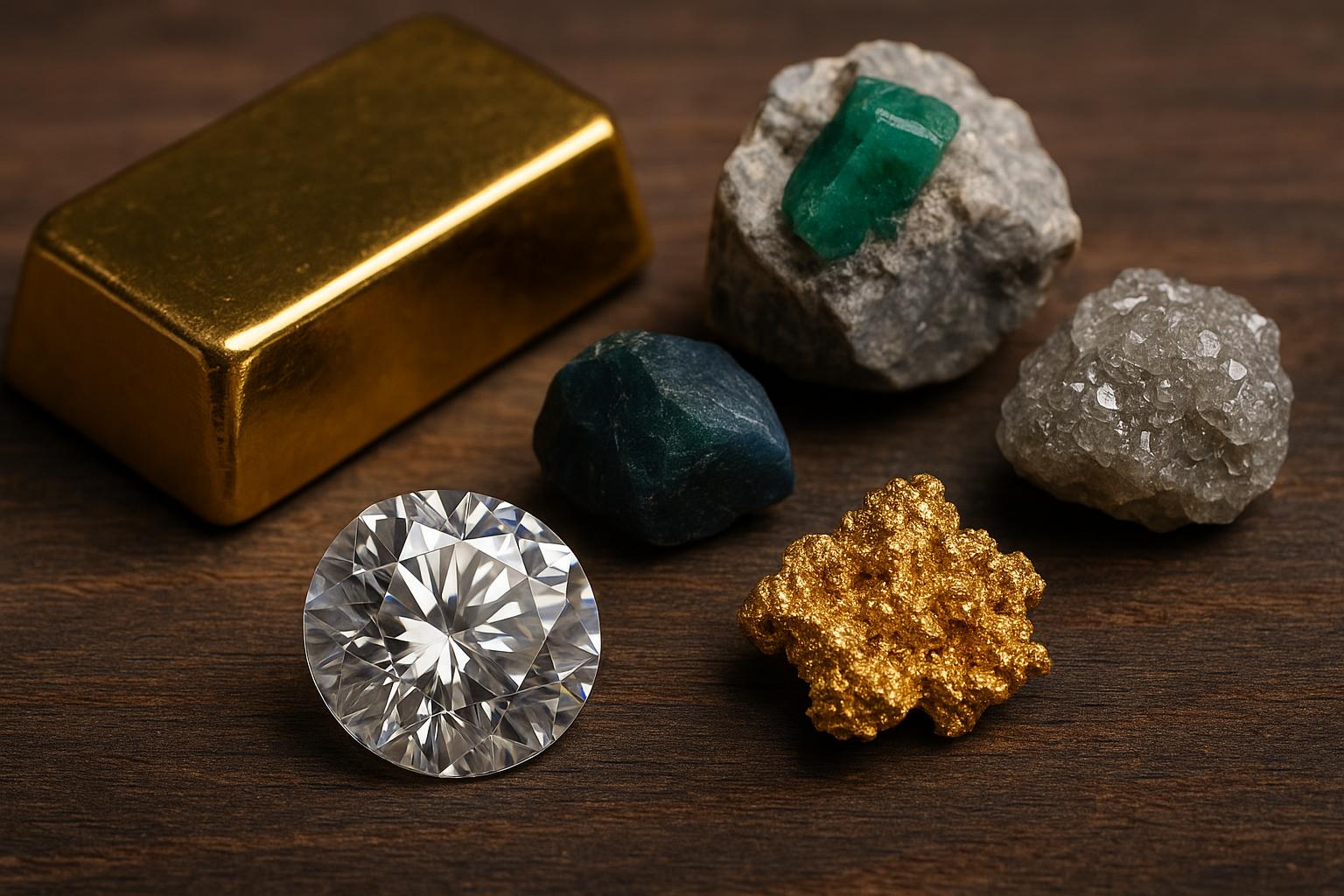
Minerals are naturally occurring elements and compounds found throughout the Earth. Most are inorganic solids, and, by weight, about 99.5 percent of minerals consist of 12 natural elements. Just 10 of the approximately 5,800 known minerals comprise 95 percent of the planet’s crust. Minerals are more than foundational components of the planet; they represent important building blocks of civilization, as many minerals have valuable and diverse uses.
When it comes to the value of specific minerals, experts categorize elements and compounds into two broad categories: functional minerals and minerals valued for their beauty. That said, certain minerals have value in both fields.
Diamonds are by far the most valuable minerals on the planet, with a price of between $4,400 and $100,000 per gram, depending on the quality. Diamonds possess aesthetic appeal in many societies, which feature them in various jewelry pieces. In many countries, diamonds rank as the most popular stone for wedding rings.
However, diamonds also represent the hardest naturally occurring substance on Earth; diamonds are nearly 60 times harder than corundum, the next hardest mineral. Diamonds are also highly thermally conductive. Their hardness and thermal conductivity make diamonds a valuable material across a wide range of industrial applications.
Similarly, many have always associated gold with prosperity and wealth. Both a mineral and a native element, gold is rare, malleable, and resistant to corrosion, making it an ideal material for expensive jewelry and a crucial economic standard. Gold also has various technological and medical applications. Gold has an approximate price of $70 per gram.
Many value platinum for its scarcity and use in the jewelry industry. Like diamonds and gold, platinum has several industrial applications, particularly in the development of automotive catalytic converters. The combination of platinum’s aesthetic value and functionality results in a price of approximately $30 per gram.
Rhodium is one of the most important platinum group minerals. A rare, highly reflective metal, rhodium is a crucial component in catalytic converters. Jewelers also use rhodium as a premium finish for jewelry.
Humans have used silver for currency and jewelry for centuries. It is also an exceptionally electrically and thermally conductive mineral, as well as highly reflective. With its numerous valuable properties, silver plays a crucial role in various industries, including electronics and photography.
Minerals valued primarily for aesthetic purposes include rubies, sapphires, and emeralds. Several other minerals have value primarily due to their scarcity, such as painite, red beryl, and jadeite.
When it comes to purely functional minerals, lithium has a value of approximately $10 per gram. Informally known as “white gold,” lithium has numerous applications, most notably in various rechargeable batteries that power electric vehicles and a wide range of portable electronic devices.
Nearly 20 elements comprise a group of valuable minerals known as rare earth elements (REEs). A few REEs include dysprosium, neodymium, and scandium. Together, these minerals play a critical role in the manufacturing of many high-tech devices, ranging from wind turbines to military equipment. REEs also help make smartphones, one of the most ubiquitous technologies on the planet. REEs can have values of up to $600 per gram.
Other valuable minerals include uranium and cobalt. Uranium is extremely valuable due to its ability to produce clean energy. Cobalt, meanwhile, has seen a rise in value in recent years due to its role in the production of rechargeable batteries and superalloys.
About David D’Addario
David D’Addario is chairman and chief executive officer of Dada Holdings in Fort Lauderdale, Florida, where he leads control investments across multiple industrial sectors. He also serves as chairman and principal of ElementUS Minerals LLC, a venture focused on extracting rare elements and minerals from bauxite residue. His leadership extends to NICHE European Holdings and its mineral processing subsidiaries. Earlier in his career he guided major aluminum, recycling, and industrial enterprises. Mr. D’Addario holds a degree from Yale University and an honorary doctorate from the University of Bridgeport.

Laila Azzahra is a professional writer and blogger that loves to write about technology, business, entertainment, science, and health.