Based in Cambridge, Massachusetts, Gunnari Auvinen is a staff software engineer at Labviva with extensive experience in software architecture, distributed systems, and modern application development. Gunnari Auvinen has contributed to major technical initiatives, including designing next-generation order processing systems, leading infrastructure modernization efforts, and implementing scalable production services. His background also includes senior software engineering roles at Turo and Sonian, where he focused on API development, React-based applications, and reducing technical debt. With more than a decade of engineering experience and a strong foundation in electrical and computer engineering from Worcester Polytechnic Institute, Mr. Auvinen brings practical insight into technology topics such as artificial intelligence and machine learning, including how intelligent systems rely on data, automation, and adaptable software design.
The Difference Between Artificial Intelligence and Machine Learning
Artificial intelligence, or AI, refers to computer systems created to perform tasks that usually require human intelligence, such as decision-making, understanding images, speech recognition, and language translation. AI combines data-driven models and rule-based systems to solve problems in various industries. It supports complex activities in transportation, healthcare, and business through adaptable software systems.
Machine learning, or ML, is a subset of artificial intelligence that focuses on building systems capable of learning from data. Instead of following only fixed rules, ML models identify patterns within large datasets and use them to make classifications or predictions. As these systems are exposed to more data, their performance can improve over time. This data-driven approach is commonly applied in areas such as fraud detection, image recognition, and recommendation systems.
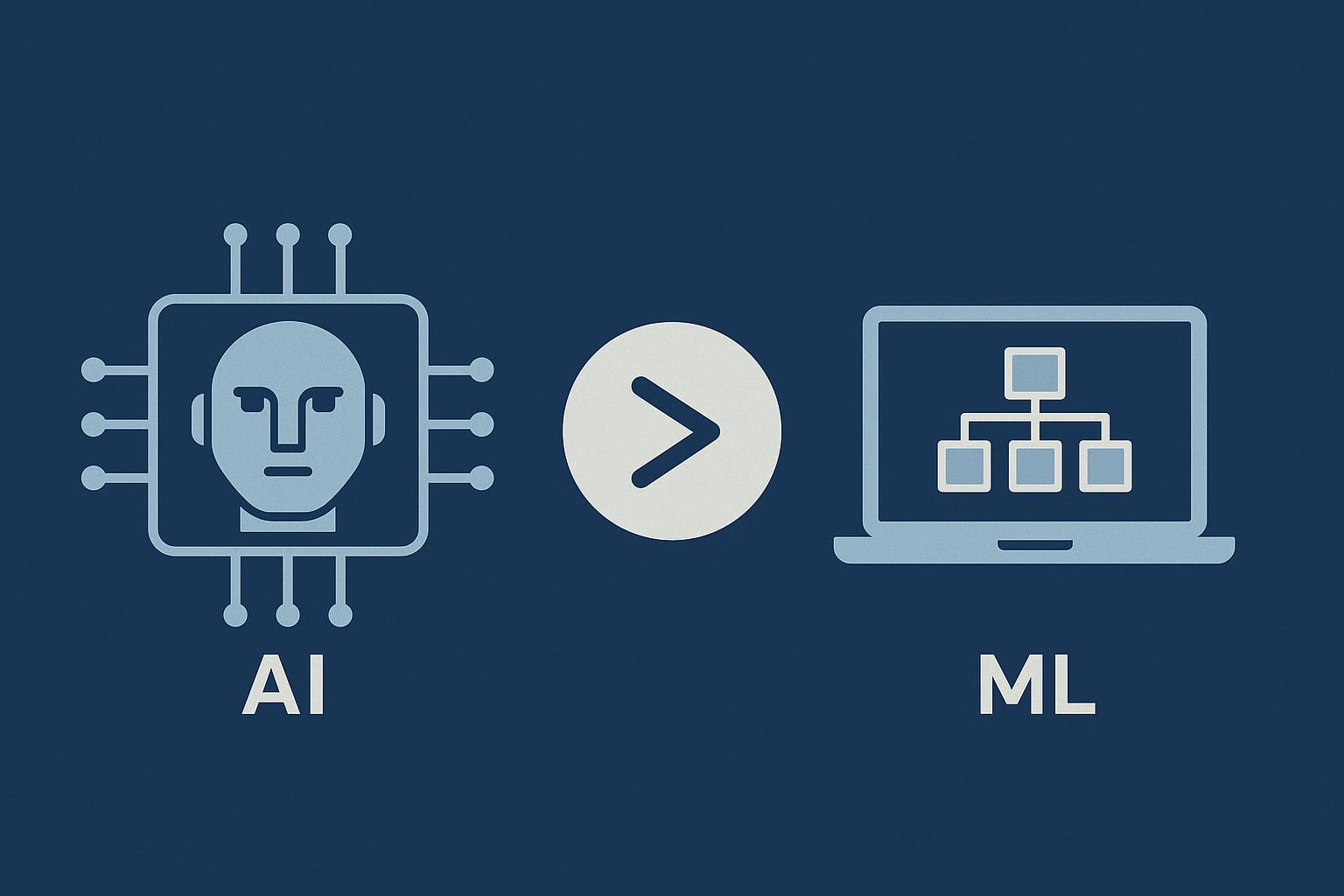
One key difference between AI and ML is that AI focuses on creating intelligent systems, whereas ML focuses on learning from data. AI can include systems based on human-defined rules and logical reasoning that do not rely on data learning. These earlier AI approaches focused on encoding expert knowledge into software. However, machine learning shifted the focus toward data-driven improvement and adaptability.
Artificial intelligence simulates broad human-like thinking, including decision-making, planning, and reasoning. ML analyzes data to recognize trends and relationships, excelling at pattern recognition, prediction, and classification, which support larger AI systems.
Data separates machine learning from other AI. ML systems rely on large, high-quality datasets to learn and produce reliable results. More data enables these systems to adjust and improve without manual reprogramming. Rule-based AI works in stable environments but struggles with unexpected conditions. ML models undergo continuous training and testing with new data, allowing them to adapt quickly online. Rule-based AI needs manual logic updates, which are slow and inflexible.
Another way to understand the difference between AI and ML is to look at the scope of problems each option addresses. AI creates systems that can perform a wide range of intelligent tasks, where machines specialize in one function, such as language translation or facial recognition. Machine learning supports many of these systems by enabling them to improve accuracy over time. However, AI does not need to learn. It can just follow already programmed rules. This broader scope makes AI the overall vision of intelligent machines, while ML focuses on optimizing specific tasks through data.
Machine learning includes supervised, deep, and unsupervised learning. Deep learning uses neural networks, inspired by the human brain, to process complex datasets. These ML techniques are tools for AI systems. AI uses learning models alongside reasoning engines, automation, and decision-making frameworks to create intelligent solutions.
The differences between AI and ML also influence how teams apply skills in technology development and workplaces. People working in machine learning often focus on model training, data analysis, and algorithm performance. In contrast, those working in artificial intelligence may design intelligent systems that combine software architecture with learning models and human interaction tools. This separation of focus helps organizations choose the right talent and tools depending on whether they need broader intelligent automation or data-driven prediction systems.
Knowing the difference between AI and ML shapes how organizations plan technology projects and measure success. AI creates intelligent systems; machine learning explains how those systems adapt and improve. ML depends on training, data quality, and ongoing evaluation. This knowledge sets realistic expectations for safety, performance, and long-term value in smart technologies.
About Gunnari Auvinen
Gunnari Auvinen is a staff software engineer at Labviva with a professional background spanning software architecture, system integration, and full-stack development. A graduate of Worcester Polytechnic Institute in electrical and computer engineering, he has held engineering roles at organizations including Turo, Sonian, and General Dynamics Advanced Information Systems. His work has included designing production services, leading technical initiatives, improving infrastructure systems, and supporting modern application development using technologies such as React, JavaScript, and TypeScript.

Laila Azzahra is a professional writer and blogger that loves to write about technology, business, entertainment, science, and health.