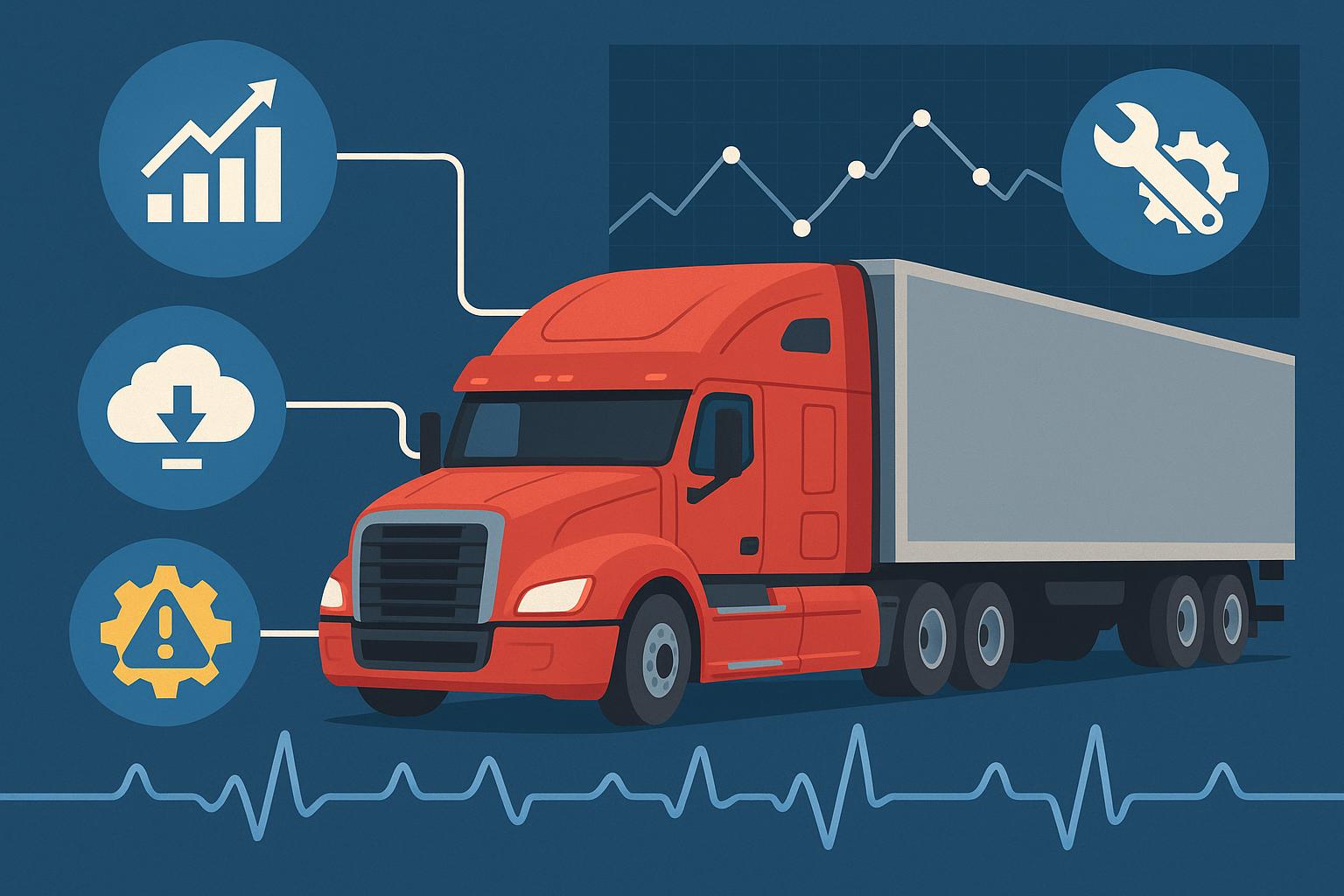
The commercial trucking sector is undergoing a data-driven transformation — and the businesses that adopt fleet maintenance technology now will dominate the next decade of logistics.
When most people think about technological disruption, they picture Silicon Valley startups and artificial intelligence chatbots. Rarely does a diesel repair bay come to mind. Yet one of the most consequential technology shifts happening in American business today is taking place inside the commercial trucking industry, where predictive maintenance systems are fundamentally changing how fleets operate, how repair shops compete, and how billions of dollars in logistics costs are managed.
The numbers tell a compelling story. The American Transportation Research Institute reports that non-fuel operating costs have reached record highs, with maintenance and repair alone averaging $0.20 per mile for most operators. For a truck running 120,000 miles annually, that represents $24,000 in maintenance spending — and that figure climbs sharply when unplanned breakdowns enter the equation. Operators who master calculating true operating costs per mile gain a significant competitive edge in rate negotiations and profitability planning.
From Reactive Repairs to Predictive Intelligence
Traditional fleet maintenance follows a simple pattern: something breaks, and a technician fixes it. Even scheduled preventive maintenance relies on static intervals — oil changes every 25,000 miles, brake inspections every 50,000 miles — that fail to account for real-world operating conditions. A truck hauling construction materials across mountain passes experiences vastly different wear patterns than one running flat highway routes between distribution centres.
Predictive maintenance technology changes this equation entirely. Modern telematics systems installed in commercial vehicles continuously monitor engine performance, transmission temperatures, brake wear, exhaust system health, and hundreds of additional data points in real time. Machine learning algorithms analyse this data against historical failure patterns to predict component failures before they occur.
The impact on fleet operations is substantial. Industry data suggests that predictive maintenance can reduce unplanned downtime by up to 50 percent and extend component life by 20 to 40 percent. For fleet operators, unplanned breakdowns represent one of the most expensive operational failures. Beyond the repair cost itself, a single roadside breakdown can generate towing fees, driver detention costs, missed delivery penalties, and cascading schedule disruptions across the entire fleet.
The Technology Stack Driving the Shift
Several converging technologies make this transformation possible. Onboard diagnostic systems have evolved far beyond basic check-engine alerts. Modern commercial vehicles produce terabytes of operational data that cloud-based platforms process and interpret. IoT sensors monitor everything from tire pressure and coolant levels to turbocharger performance and diesel particulate filter loading.
Fleet management software platforms like Samsara, Geotab, and Fleetio integrate this sensor data with maintenance scheduling, parts inventory, and cost tracking. These systems create comprehensive digital profiles for each vehicle, enabling maintenance decisions based on actual condition rather than arbitrary schedules. The result is a shift from calendar-based maintenance to condition-based maintenance, which allocates resources far more efficiently.
Artificial intelligence plays an increasingly central role. Machine learning models trained on millions of miles of fleet data can identify subtle performance degradation patterns that human technicians would miss. A slight change in fuel consumption trends, for example, might indicate an injector issue weeks before it triggers a fault code. This early detection window gives operators time to schedule repairs during planned maintenance windows rather than responding to emergency breakdowns.
What This Means for Small Fleet Operators and Independent Shops
While enterprise fleets with hundreds of trucks were early adopters of these technologies, the cost of entry has dropped significantly. Cloud-based subscription models now make sophisticated fleet management tools accessible to operators running as few as five to ten trucks. This democratisation of fleet technology is reshaping competitive dynamics across the entire industry.
Independent diesel repair shops are adapting as well. Shops that invest in diagnostic capabilities compatible with telematics platforms can position themselves as preferred maintenance partners for technology-forward fleets. Rather than waiting for breakdown calls, these shops proactively reach out to fleet managers when vehicle data indicates upcoming service needs. This shift from reactive to consultative service delivery creates stronger client relationships and more predictable revenue streams. For shop owners focused on diesel fleet maintenance strategies, embracing telematics integration represents one of the highest-impact growth investments available today.
Challenges and Considerations
The transition is not without obstacles. Data security remains a significant concern, as fleet telematics systems transmit sensitive operational information across cloud networks. Operators must evaluate the cybersecurity protocols of any platform they adopt, including data encryption standards, access controls, and compliance with relevant privacy regulations.
Integration complexity also presents challenges. Many fleets operate mixed-age vehicle populations where newer trucks generate rich telematics data while older units rely on basic OBD-II connections. Building a unified maintenance strategy across this technology gap requires careful platform selection and realistic expectations about data coverage.
There is also the human factor. Technicians and shop managers must develop new competencies in data interpretation, software management, and digital workflow integration. The most successful fleet operations combine technological capability with experienced human judgment, using data as a decision-support tool rather than a replacement for hands-on diagnostic expertise.
The Road Ahead
The Bureau of Labor Statistics projects continued growth in demand for diesel service technicians through 2032, yet the industry faces a persistent shortage of qualified professionals. This supply-demand imbalance creates urgency around efficiency. Predictive maintenance technology does not replace skilled technicians — it amplifies their effectiveness by ensuring they spend time on the right repairs at the right moment.
For business leaders and technology observers, the commercial trucking industry offers a case study in how established, traditionally low-tech sectors can be transformed by thoughtful technology adoption. The companies and independent operators embracing predictive maintenance today are not chasing innovation for its own sake. They are solving concrete operational problems — reducing costs, preventing downtime, extending equipment life — using technology as the enabling tool.
As fleet maintenance technology continues to mature, the gap between early adopters and laggards will widen. The trucking industry moves 72 percent of all freight tonnage in the United States. Keeping those trucks operational is not just a business concern. It is an infrastructure imperative, and the technology making it possible deserves far more attention than it currently receives.

Laila Azzahra is a professional writer and blogger that loves to write about technology, business, entertainment, science, and health.