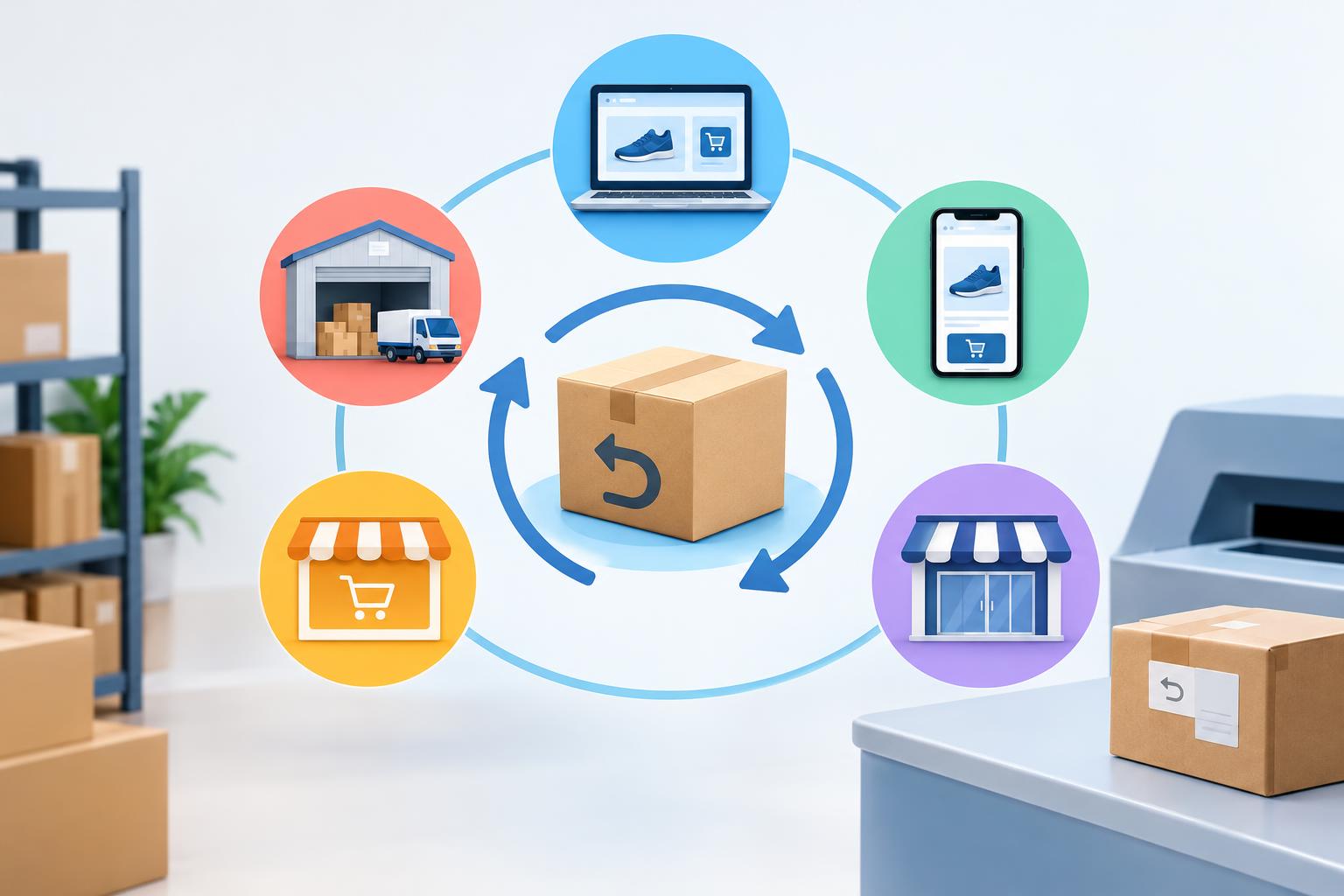
Returns used to be simple when customers bought from one website and mailed items back to one address. Now a single brand might sell through its own store, several marketplaces, social commerce and physical retail, and customers expect to return an item through whichever route suits them.
Each of those routes has its own rules, timelines and data. Without a clear process, returned items sit in a corner of the warehouse for weeks, refunds go out late, and stock that could be sold again stays invisible to every channel.
This guide explains how to set a workable returns policy across channels, track every return from the first request, and turn sellable units back into available stock quickly.
Why Returns Get Harder as Channels Multiply
Every sales channel adds a new version of the returns process. Marketplaces set their own return windows and refund triggers, retail stores accept items over the counter, and your webstore follows whatever policy you published.
The trouble starts when these processes do not connect. A customer who bought on your website and returned the item to a store may wait days for a refund because the store has no record of the order. A marketplace may refund automatically while the item is still in transit, leaving your team to reconcile the loss later.
Disconnected returns also distort stock figures. Units that are physically back in the building but not yet processed remain unavailable, so channels show items as out of stock while they sit a few meters from the packing bench.
Set a Baseline Policy Your Channels Can Support
Start with one baseline policy that covers your own channels, then document where marketplace rules override it. A consistent baseline makes training easier and reduces disputes.
Define the return window, accepted conditions, who pays return shipping and when refunds are issued. Then list each marketplace’s requirements next to your baseline, so staff know which rule applies to which order. Customers rarely mind different rules on different platforms, as long as each rule is applied reliably.
Give Every Return a Record Before It Moves
A return should exist as a record before the item leaves the customer’s hands. That record links the returned item to the original order, the channel it came from and the reason the customer gave.
An omnichannel order management system makes this possible because it holds orders from every channel in one place. A store associate can look up a webstore order, a support agent can raise a return for a marketplace purchase, and the refund rules for that channel apply automatically. Without that shared order history, each team works from partial information and refunds stall.
Capture a reason code with every return. Vague notes such as “didn’t want” are far less useful than structured codes like wrong size, damaged in transit or not as described.
Inspect and Grade Returns Consistently
Every returned item needs a decision about what happens next. Consistent grading prevents good stock from being written off and damaged stock from being resold.
A simple grading scheme works for most brands:
- Grade A, unopened or as new, goes straight back into sellable stock
- Grade B, opened but undamaged, is repackaged and restocked or sold as open box
- Grade C, minor defects, is routed to outlet channels or clearance
- Grade D, damaged or unsafe, is returned to the supplier, recycled or disposed of
Write clear criteria for each grade with photos where possible. Inspectors should reach the same decision for the same item regardless of who is on shift.
Get Sellable Units Back on the Shelf Fast
Speed matters most after grading. Every day a sellable item waits for putaway is a day it cannot earn revenue, and seasonal products lose value quickly.
Good warehouse management system (WMS) tools treat returns as a dedicated inbound flow rather than an afterthought. Modern wms software can direct restocked items to a specific bin, update available quantities the moment putaway is scanned, and keep graded stock separate so open-box units are never shipped as new. That immediate update is what lets every sales channel see the returned unit as available again.
Set a target for how quickly graded items reach their bins, and review any backlog daily during busy periods.
Track the Numbers That Show Where Returns Start
Returns data is one of the most useful sources of product feedback a brand has. Reviewed regularly, it points to problems that no amount of processing speed can fix.
Look at return rates by product, by channel and by reason code. A dress with frequent wrong-size returns may need a better size chart. A product with frequent damaged-in-transit returns may need stronger packaging. A marketplace with unusually high returns may have a listing that sets the wrong expectations.
Final Thoughts
Returns become manageable when every channel feeds one process. Set a baseline policy, create a record for every return before it moves, grade items consistently and restock sellable units fast. Then use the reasons behind your returns to fix the products and listings that cause them.

Laila Azzahra is a professional writer and blogger that loves to write about technology, business, entertainment, science, and health.