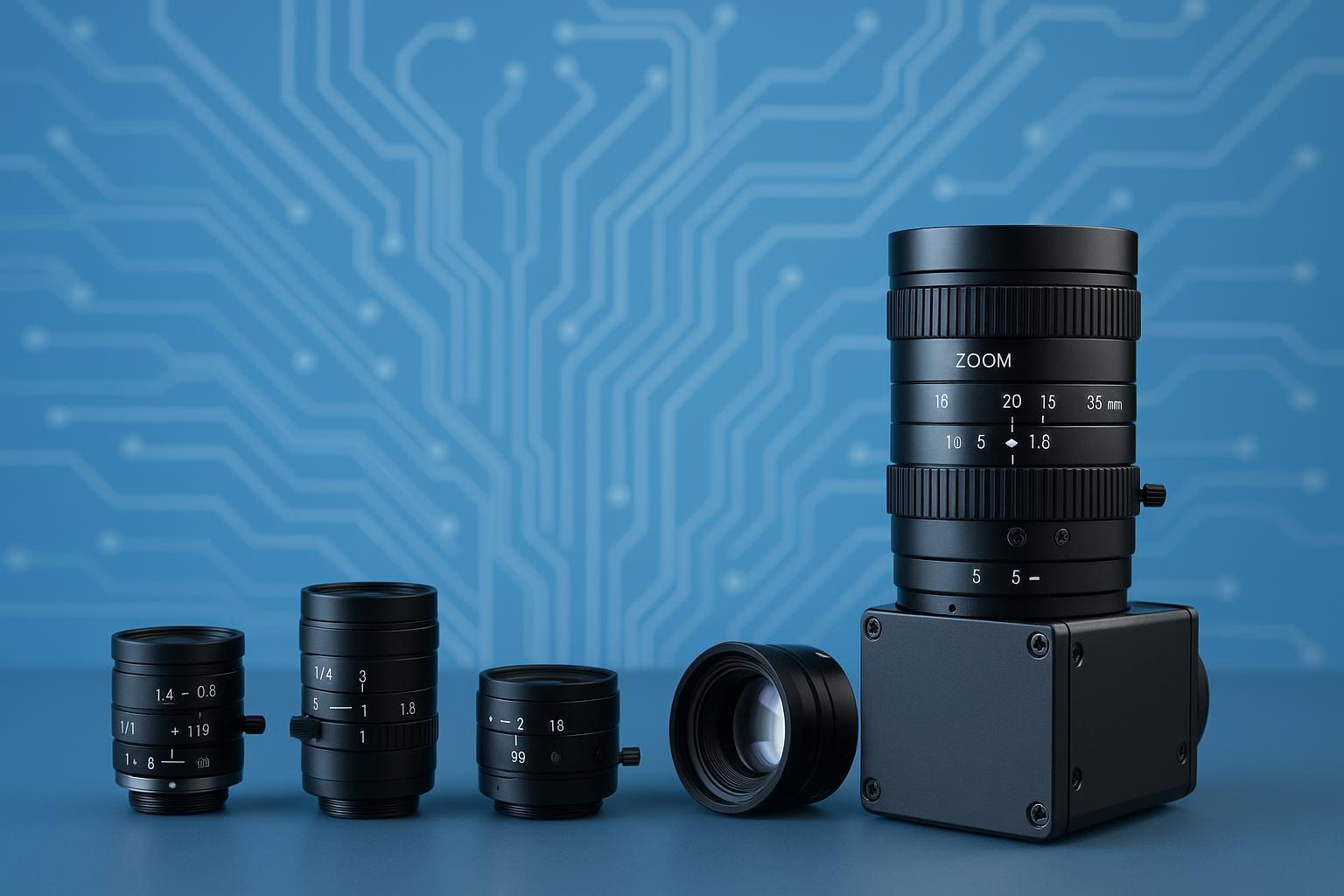
The Science Behind Machine Vision: How Lenses Transform Images
The Role of Optics in Image Clarity
In the realm of machine vision, optics act as the bridge between the physical world and digital interpretation. The clarity of an image captured by a camera is fundamentally dictated by the optical components of the lens. Every optical element, from glass quality to coating technologies, contributes to image resolution, contrast, and sharpness. High-quality lenses are designed to reduce aberrations, which are optical imperfections that can lead to blurred or distorted images. Such aberrations include spherical aberration, chromatic aberration, and coma, each impacting the fidelity of the final image. The art of designing a machine vision lens requires a fine balance to ensure that these optical flaws are minimized to an acceptable level. In practice, users must pay attention to the specifications such as modulation transfer function (MTF), which quantifies how well a lens can reproduce an object at different spatial frequencies essentially translating to the capacity of the lens to retain image detail across various focuses.
Understanding Distortion: The Aesthetic vs. Practical Implications
Every lens exhibits some degree of distortion, which is notably classified into barrel, pincushion, and mustache distortions. Understanding these distortions is vital, especially in applications where precision measurement is necessary. For instance, barrel distortion causes straight lines to bulge outward from the center, which can be aesthetically pleasing in certain contexts but detrimental in applications like quality control in manufacturing or robotics, where accurate representation of object dimensions is critical. In contrast, pincushion distortion pulls the edges inwards, which may not be visually appealing in photography but can also lead to misrepresentation in industrial inspections. Sophisticated lens correction algorithms can mitigate these issues during image processing; nevertheless, selecting a lens designed to minimize distortion from inception is the smarter choice for professionals aiming for accuracy in machine vision tasks.
How Sensor Size Influences Lens Selection
The sensor size of a camera is a pivotal factor in determining the optimal lens selection for a machine vision application. Sensors come in various formats such as full-frame, APS-C, or even smaller formats like the 1-inch type, and each size constrains the field of view and depth of focus that can be achieved. A larger sensor typically collects more light and features a broader dynamic range, enhancing the image’s overall quality and detail. However, pairing a large sensor with a lens that has a small image circle can lead to vignetting darkening at the corners of the image that’s unacceptable in precision applications. When choosing a lens, it’s crucial to consider not just compatibility, but also how the sensor format affects the required focal length and depth of field. For instance, a larger sensor might necessitate a longer focal lens to capture the same field of view as a smaller sensor, which further influences the working distance and positioning of the lens in relation to the object being captured.
Navigating the Lens Landscape: Types of Machine Vision Lenses Explained
Fixed vs. Varifocal: When to Choose Each Option
The choice between fixed and varifocal lenses hinges on the specific requirements of the application at hand. Fixed lenses, as the name suggests, offer a predetermined focal length, which often translates to superior optical quality due to the simplicity in their design. These lenses are ideal for applications where the distance to the target object is constant and known, providing high performance in terms of image clarity and reduced distortion. In contrast, varifocal lenses feature adjustable focal lengths, allowing users to modify the field of view and working distance on the fly. This flexibility comes at the cost of increased complexity and potential optical aberrations. In scenarios like surveillance or inspection where different perspectives are required, the choice of a varifocal lens can significantly enhance the adaptability of the vision system, but users must remain vigilant about calibrating the system to ensure accurate measurements across varying focal lengths.
Telecentric vs. Standard Lenses: The Pros and Cons
Telecentric lenses excel in applications requiring precise measurements and consistent magnification across different object distances. Unlike standard lenses that create perspective changes with varying distances, telecentric lenses maintain a constant magnification regardless of the object’s position relative to the lens. This characteristic is particularly desirable in high-precision tasks such as automated inspection or robot guidance, where accurate dimensional measurements are critical. However, telecentric lenses require careful alignment and a suitable working distance that can limit flexibility in deployment compared to standard lenses. Standard lenses, while more widely applicable and easier to integrate for general machine vision tasks, may introduce variances in measurement accuracy if the object is not consistently placed at the optimal focal point. Ultimately, the decision must consider the specific measurement requirements and the physical setup of the machine vision system.
Specialty Lenses: Infrared, Macro, and Beyond
Specialty lenses serve niche applications where standard lens options may fall short. Infrared lenses, for example, are designed to capture light in the infrared spectrum, enabling applications such as thermal imaging and analyzing night vision where traditional optics fail. These lenses require unique materials such as calcium fluoride or germanium that can effectively transmit infrared light. Macro lenses, on the other hand, allow for extreme close-up photography necessary for inspecting small components or capturing minute details in applications like semiconductor testing. Beyond these, other specialty lenses include fisheye, high-speed, and telephoto lenses, each tailored to meet specific imaging needs in various industrial, scientific, and creative domains. Selecting the right specialty lens hinges on understanding the unique optical characteristics required for the specific application, ensuring optimal performance and results.
Key Considerations When Choosing Your Machine Vision Lens
Focal Length and Working Distance: Finding the Perfect Balance
The interplay between focal length and working distance is foundational in machine vision lenses, dictating how an object will be imaged on the sensor. Focal length determines the magnification of the image; longer focal lengths yield larger images but necessitate greater working distances. Conversely, shorter focal lengths are suitable for close-up imaging but often capture broader fields of view. A crucial aspect of design is to balance these factors with the physical constraints of the application environment. The required working distance can be influenced by factors like lighting conditions and the physical size of the object being imaged. A correct focal length not only enhances image detail but also meets the spatial constraints of the setup, thereby boosting overall system performance.
Aperture and Light Sensitivity: Unlocking Low-Light Performance
The aperture of a lens plays a significant role in determining its light sensitivity, directly impacting image quality in low-light scenarios. Wider apertures allow more light to enter the lens, which is essential for high-speed applications or environments with limited illumination. However, opting for a wide aperture can compromise depth of field, leading to challenges in keeping the entire subject in sharp focus. It’s imperative to consider the balance between aperture size, depth of field, and light sensitivity, particularly in applications such as motion analysis or quality control inspection under varying light conditions. Employing lenses with exceptional light-gathering capabilities enhances the overall efficiency of the machine vision system and boosts the reliability of data capture, mitigating risks of missed defects or motion blur.
Mounting Options and Compatibility: What You Need to Know
Understanding mounting options is critical when integrating machine vision lenses into vision systems. Various types of mounts such as C-mount, CS-mount, and M42-mount adjust to different camera designs and constructions, impacting how lenses interface with image sensors. The choice of mount affects the lens’s alignment, distance, and stability, all of which contribute to optimal performance. Compatibility between the lens and camera is paramount, influencing overall system functionality and image quality. Incompatibility can lead to focusing issues, vignetting, or even physical damage to components. Moreover, it’s vital to consider adaptors or extension tubes when utilizing lenses on cameras with differing mount types, as this can influence working distance and magnification. Taking the time to assess these factors ensures a cohesive and effective vision system that excels in operational efficiency.
Future Trends in Machine Vision Lenses: What’s on the Horizon?
Advancements in Artificial Intelligence and Optics
The convergence of artificial intelligence (AI) and optics is poised to revolutionize the field of machine vision. AI algorithms can analyze vast amounts of visual data far more efficiently than traditional methods, enabling real-time analytics and enhancing decision-making processes. The integration of deep learning technologies allows for improved optical designs that can self-calibrate and adapt to environmental variables, supporting more robust and flexible solutions. Moreover, AI-driven predictive maintenance can significantly enhance operational reliability by forecasting potential lens performance degradation and facilitating preemptive measures. Current research is directing efforts towards creating intelligent lenses with embedded sensors capable of interpreting conditions in real time, effectively transforming machine vision systems into proactive entities capable of self-optimization.
The Impact of 3D Imaging Technologies
3D imaging technologies are rapidly gaining traction in machine vision applications, necessitating corresponding innovations in lens design. Traditional 2D lenses will be supplemented or replaced by lenses capable of capturing height, depth, and spatial awareness for enhanced dimensional measurements. Stereoscopic and structured light systems are becoming integral in sectors like robotics and autonomous vehicles, where understanding the physical characteristics of the environment is critical. The transition to 3D imaging necessitates a reevaluation of existing lens technologies to optimize for parameters such as depth of field and field of view. As the demand for more immersive and accurate imaging in industrial and consumer applications rises, we will likely witness the emergence of new optical designs, materials, and manufacturing techniques tailored specifically for 3D capabilities.
Sustainability in Lens Manufacturing: A Greener Future
As awareness of environmental impact continues to grow, sustainability in lens manufacturing is becoming increasingly important. Manufacturers are investing in eco-friendly production processes, utilizing recyclable materials, and reducing waste in the lens-making process. In this effort, the lens industry is exploring the use of sustainable optics materials as alternatives to traditional glass and plastics, seeking to minimize the carbon footprint associated with lens production. Moreover, manufacturers are beginning to adapt minimalist designs that reduce material consumption while maintaining performance, aligning with both cost-effectiveness and environmental responsibility. As sustainability becomes an essential consideration, future machine vision lens products are expected to embody these values, ensuring that innovation does not come at the expense of the planet’s well-being.

Laila Azzahra is a professional writer and blogger that loves to write about technology, business, entertainment, science, and health.