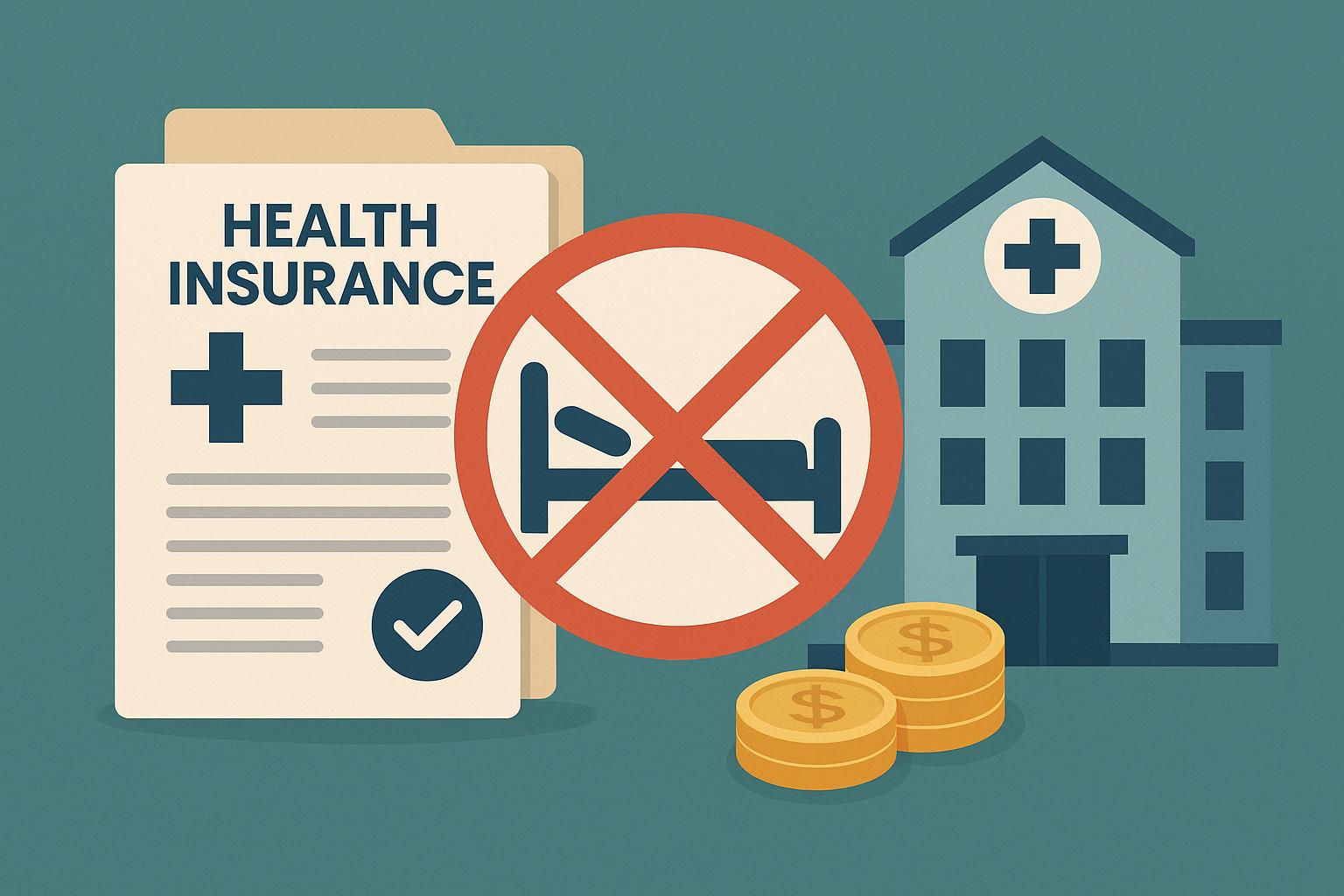
When you buy health insurance, you often assume any hospital visit will be paid. But most policies treat in-patient hospitalisation differently from quick visits. In simple terms, you are usually covered only when you are admitted to a hospital for at least 24 consecutive hours, unless the treatment is listed as a day care procedure or falls under a specific exception in your policy.
Key exclusions of 24-hour hospitalisation
Here is what is excluded from the concept of 24-hour hospitalisation under health insurance plans
OPD expenses
If you go to a hospital for a consultation, injections, dressing, nebulisation, or a follow-up and you are not formally admitted, the claim usually won’t qualify under 24-hour hospitalisation. This is commonly treated as OPD (out-patient) care, which standard health plans generally don’t cover unless you have an OPD add-on or a special plan.
Cosmetic treatment
If you have undergone treatment that was done only to improve appearance are usually not covered under health insurance. For example, if you choose a hair transplant or cosmetic nose surgery for personal preference, the insurer will reject the claim. However, if facial reconstruction is required after a road accident or severe burn and the doctor prescribes hospitalisation for over 24 hours, citing the treatment as medically necessary, then the policy will cover it.
Substance abuse
Critical illness insurance does not cover hospitalisation caused by self-inflicted injuries, substance misuse, or illegal acts. For example, if you are admitted for over 24 hours after a road accident while driving under the influence of alcohol, the insurer can reject the claim. Similarly, if you have sustained an injury from intentional self-harm or from taking part in unlawful activities, your insurer will not cover such claims. In such cases, insurers rely on hospital records, police reports, and medico-legal notes to decide claim eligibility.
Unproven treatment
The 24-hour hospitalisation policy does not cover bills if you have availed experimental, unproven, or investigational treatments that are still being tested and are not yet accepted as standard medical care. For example, if you choose a newly introduced cancer therapy that is still under clinical trials and not approved in standard treatment guidelines, then, regardless of a 24-hour hospital stay, your insurer may reject the claim.
Specific waiting period
Even if you were healthy when you bought the policy, some treatments have a fixed waiting period. For example, you buy health insurance today with no medical history. After eight months, you are diagnosed with a hernia and need surgery. Even though the condition was not pre-existing, your claim may be rejected because a hernia falls under ‘specified ailments’ with a waiting period, usually 1–2 years. Only after this period is completed will the insurer cover the surgery, as per the IRDAI-approved policy terms.
Dental treatment
Most 24-hour hospitalisation health insurance plans do not cover routine dental, eye, or hearing expenses because these are seen as regular care, not emergencies. For example, if you visit a dentist for a root canal or buy spectacles after an eye check-up, the insurer will not pay for these costs. However, if you meet with a road accident and suffer a jaw fracture or serious eye injury that requires over 24-hour hospitalisation and surgery, the treatment may be covered.
Non-medical expenses
Non-medical expenses are costs added to your hospital bill that are not directly linked to medical treatment, and insurers usually do not pay for them. For example, items such as gloves beyond limits, face masks, hand sanitiser, toiletries, extra bed charges for an attendant, and personal comfort items such as premium meals are subject to the policy’s exclusions. Even small consumables like syringes or dressings may be partly disallowed if they fall under the insurer’s non-medical list.
Conclusion
The 24-hour hospitalisation rule mainly excludes OPD care, emergency room visits ending in same-day discharge, and procedures not recognised as covered day care. However, even with admission, items like non-medical charges, treatment availed during the waiting period, and other standard exclusions under the policy document can result in claim rejection. Always read the policy document to avoid last-minute surprises.

Laila Azzahra is a professional writer and blogger that loves to write about technology, business, entertainment, science, and health.